
Close
Back


From now on you can download videos from our website
If you would also like to subscribe to the newsletter and receive our latest updates, click on the button below.
Enter the email address you registered with and we will send you a code to reset your password.
The password must be at least 12 characters long, no spaces, include upper/lowercase letters, numbers and symbols.
Click the button to return to the page you were on and log in with your new password.
21 March 2014
3 MIN READ
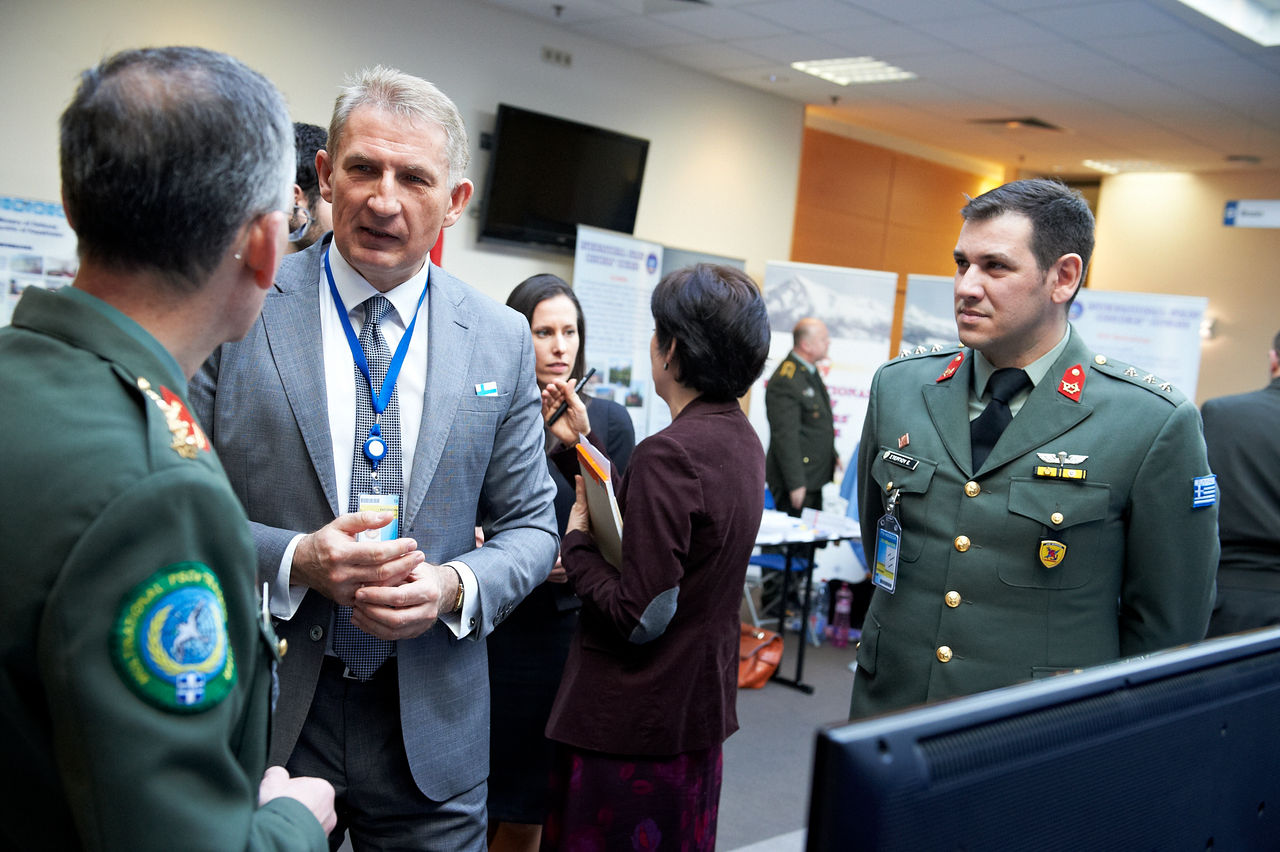
''What PTECs do is the core business of NATO. Education and training is central to interoperability and capacity building, making PTECs a great asset,'' explains Dr Jaroslaw Skonieczka, Senior Director for Integration, Partnerships and Cooperation, NATO International Staff. ''PTECs collectively teach some 16,000 military and civilians per year, which represents a huge investment in the future.''
The Partnership Training and Education Centre (PTEC) network consists of 26 centres based in 23 NATO and partner countries, representing unique training in a variety of critical capabilities to include language training, crisis management, law of armed conflict, democratic control of the armed forces and defence structures, gender perspectives, and peace and security. As such, they collectively contribute to reinforcing and diversifying NATO’s partnership activities. In 2013 alone, some 12,500 students from Allied and partner countries attended residence courses and over 3,400 students participated in Mobile Education and Training Teams.
Since 1999, PTECs have effectively played a key role in supporting NATO’s partnership objectives. They collaborate to offer enhanced support to interested partners to develop their defence-related education and training capacities and support the development and transformation of partners’ professional military education institutions. The courses help NATO and partner participants work together and share expertise, with the aim of increasing understanding, efficiency and, ultimately, interoperability in the field. For instance, one of the centres offers border security, logistics and military cooperation courses, while another focuses on media training for peace support operations and crisis communication - very concrete areas of study which are of direct use and interest to a wide public.
Representatives from many of these training centres came together at NATO Headquarters on 19-20 March 2014 to introduce themselves to the wider NATO community, presenting their course guides and the overarching missions of the respective centres. At the opening event, Brigadier General Ivan Caruso stated that PTECs "will be the key in keeping our common level of education and training capacities at the highest level”.
Evoking the future role of the community, Captain (N) W. Scott Butler, Commandant of the NATO School Oberammergau, said “Moving forward to the post-operations context, PTECs will remain a driving force for enhancing NATO and partner interoperabilityThis was also stressed by Colonel Hans Bühl, Deputy Supreme Allied Commander Transformation Representative in Europe“for fifteen years PTECs have played a key role in enhancing partner interoperability and will continue to support our partnership objectives with increased importance post-2014”.
(*) indicates institutions that participated in this year’s “Marketplace”