
Close
Back


From now on you can download videos from our website
If you would also like to subscribe to the newsletter and receive our latest updates, click on the button below.
Enter the email address you registered with and we will send you a code to reset your password.
The password must be at least 12 characters long, no spaces, include upper/lowercase letters, numbers and symbols.
Click the button to return to the page you were on and log in with your new password.
FROM THIS GALLERY
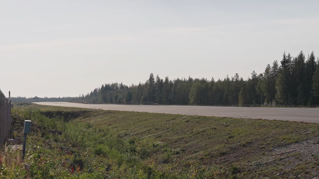


An F-35A fighter aircraft lands on a highway in Finland. US Air Force pilots in fifth-generation F-35A fighter aircraft have practised landing on a highway in Europe for the very first time. Two F-35A Lightning II fighters landed on a strip of road of about 30 metres wide in the region of Lapland (Finland), as part of exercise Baana 24, a Finnish Air Force road-based exercise, which also featured the participation of personnel and assets from Allied countries Germany and the United States. The landing was undertaken by two US Air Force F-35A Lightning II aircraft assigned to the 493rd Fighter Squadron, 48th Fighter Wing, currently based at Royal Air Force Lakenheath in the United Kingdom.
An F-35A fighter aircraft lands on a highway in Finland. US Air Force pilots in fifth-generation F-35A fighter aircraft have practised landing on a highway in Europe for the very first time. Two F-35A Lightning II fighters landed on a strip of road of about 30 metres wide in the region of Lapland (Finland), as part of exercise Baana 24, a Finnish Air Force road-based exercise, which also featured the participation of personnel and assets from Allied countries Germany and the United States. The landing was undertaken by two US Air Force F-35A Lightning II aircraft assigned to the 493rd Fighter Squadron, 48th Fighter Wing, currently based at Royal Air Force Lakenheath in the United Kingdom.
Close-up of the cockpit of an F-35A fighter aircraft as it lands on a highway in Finland. US Air Force pilots in fifth-generation F-35A fighter aircraft have practised landing on a highway in Europe for the very first time. Two F-35A Lightning II fighters landed on a strip of road of about 30 metres wide in the region of Lapland (Finland), as part of exercise Baana 24, a Finnish Air Force road-based exercise, which also featured the participation of personnel and assets from Allied countries Germany and the United States. The landing was undertaken by two US Air Force F-35A Lightning II aircraft assigned to the 493rd Fighter Squadron, 48th Fighter Wing, currently based at Royal Air Force Lakenheath in the United Kingdom.
An F-35A fighter aircraft after landing on a highway in Finland. US Air Force pilots in fifth-generation F-35A fighter aircraft have practised landing on a highway in Europe for the very first time. Two F-35A Lightning II fighters landed on a strip of road of about 30 metres wide in the region of Lapland (Finland), as part of exercise Baana 24, a Finnish Air Force road-based exercise, which also featured the participation of personnel and assets from Allied countries Germany and the United States. The landing was undertaken by two US Air Force F-35A Lightning II aircraft assigned to the 493rd Fighter Squadron, 48th Fighter Wing, currently based at Royal Air Force Lakenheath in the United Kingdom.
Wide shot of an F-35A fighter aircraft after landing on a highway in Finland. US Air Force pilots in fifth-generation F-35A fighter aircraft have practised landing on a highway in Europe for the very first time. Two F-35A Lightning II fighters landed on a strip of road of about 30 metres wide in the region of Lapland (Finland), as part of exercise Baana 24, a Finnish Air Force road-based exercise, which also featured the participation of personnel and assets from Allied countries Germany and the United States. The landing was undertaken by two US Air Force F-35A Lightning II aircraft assigned to the 493rd Fighter Squadron, 48th Fighter Wing, currently based at Royal Air Force Lakenheath in the United Kingdom.
An F-35A fighter aircraft takes off from a highway in Finland. US Air Force pilots in fifth-generation F-35A fighter aircraft have practised landing on a highway in Europe for the very first time. Two F-35A Lightning II fighters landed on a strip of road of about 30 metres wide in the region of Lapland (Finland), as part of exercise Baana 24, a Finnish Air Force road-based exercise, which also featured the participation of personnel and assets from Allied countries Germany and the United States. The landing was undertaken by two US Air Force F-35A Lightning II aircraft assigned to the 493rd Fighter Squadron, 48th Fighter Wing, currently based at Royal Air Force Lakenheath in the United Kingdom.
An F-35A fighter aircraft takes off from a highway in Finland. US Air Force pilots in fifth-generation F-35A fighter aircraft have practised landing on a highway in Europe for the very first time. Two F-35A Lightning II fighters landed on a strip of road of about 30 metres wide in the region of Lapland (Finland), as part of exercise Baana 24, a Finnish Air Force road-based exercise, which also featured the participation of personnel and assets from Allied countries Germany and the United States. The landing was undertaken by two US Air Force F-35A Lightning II aircraft assigned to the 493rd Fighter Squadron, 48th Fighter Wing, currently based at Royal Air Force Lakenheath in the United Kingdom.
An F-35A fighter aircraft takes off from a highway in Finland at sunset. US Air Force pilots in fifth-generation F-35A fighter aircraft have practised landing on a highway in Europe for the very first time. Two F-35A Lightning II fighters landed on a strip of road of about 30 metres wide in the region of Lapland (Finland), as part of exercise Baana 24, a Finnish Air Force road-based exercise, which also featured the participation of personnel and assets from Allied countries Germany and the United States. The landing was undertaken by two US Air Force F-35A Lightning II aircraft assigned to the 493rd Fighter Squadron, 48th Fighter Wing, currently based at Royal Air Force Lakenheath in the United Kingdom.