
Close
Back


From now on you can download videos from our website
If you would also like to subscribe to the newsletter and receive our latest updates, click on the button below.
Enter the email address you registered with and we will send you a code to reset your password.
The password must be at least 12 characters long, no spaces, include upper/lowercase letters, numbers and symbols.
Click the button to return to the page you were on and log in with your new password.
04 December 2024
2 MIN READ
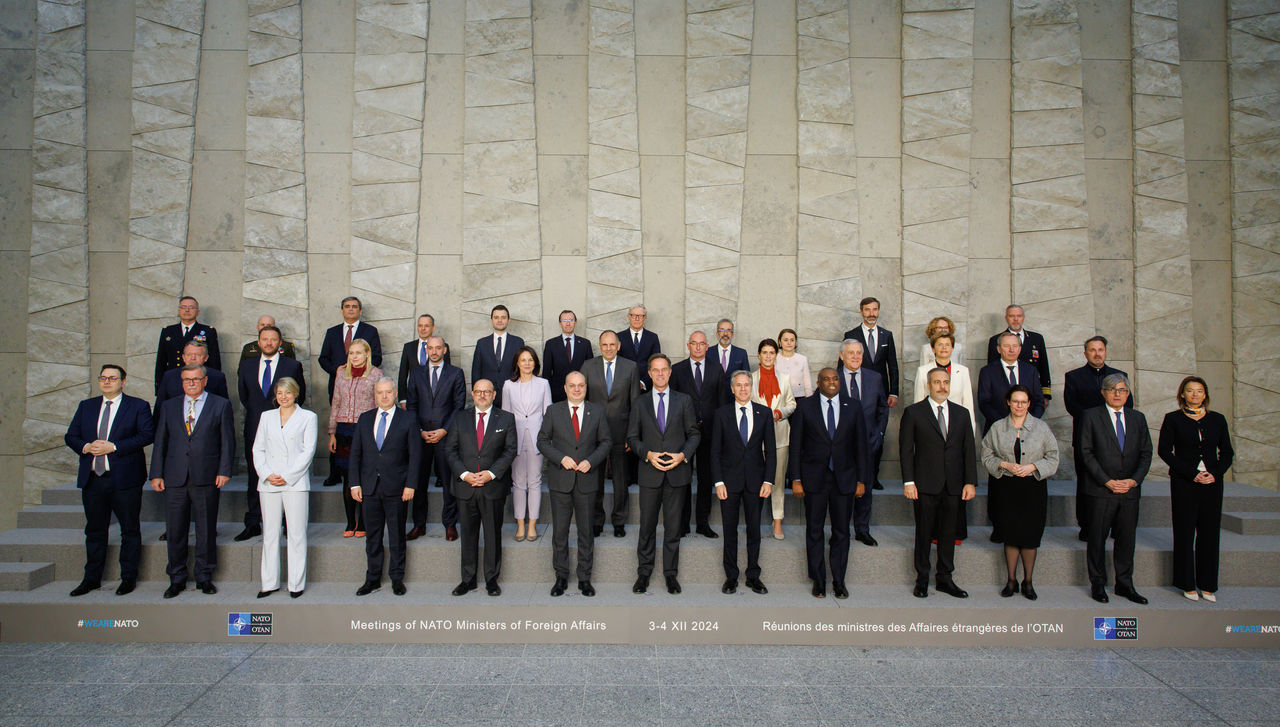
NATO Foreign Ministers wrapped up two days of meetings in Brussels on Wednesday (December 4) addressing Russia’s escalating campaign of hostile actions in NATO countries.
At their meeting on Wednesday, Allies considered a set of measures to counter Russia’s actions against NATO and individual Allies. Secretary General Mark Rutte said that “both Russia and China have tried to destabilise our countries and divide our societies with acts of sabotage, cyber-attacks, and energy blackmail”. He noted that Ministers agreed a set of measures to counter Russia’s hostile and cyber activities, including enhanced intelligence exchange, more exercises, better protection of critical infrastructure, improved cyber defence, and tougher action against Russia’s “shadow fleet” of oil exporting ships. He further stressed that NATO “will work closely together with the EU on these issues”. Mr. Rutte underscored that the increasing alignment of Russia, China, North Korea and Iran highlights the global nature of the threats we face, including the escalating dangers of the ongoing war in Ukraine. He noted that in return for troops and weapons, Russia is providing North Korea with support for its missile and nuclear programmes. “These developments could destabilise the Korean Peninsula and even threaten the United States. So Russia’s illegal war in Ukraine threatens us all”, he said.
During the two-day meeting NATO Allies also met with His Majesty King Abdullah II of Jordan to discuss the situation in the Middle East and the importance of NATO cooperating even more closely with its partners in the region. The Secretary General thanked the King of Jordan for his personal leadership and support to the Alliance and noted that NATO will open a Liaison Office in Amman soon to further deepen these ties.
NATO Ministers also met with Ukraine’s Foreign Minister Andrii Sybiha, and with Kaja Kallas, the new EU High Representative, in the NATO-Ukraine Council. They discussed Ukraine’s most urgent needs, as well as what more Allies can do to provide critical ammunition and air defences, as Russia steps up its attacks and expands the war with the aid of North Korean troops and weapons. Mr Rutte noted that continued support for Ukraine is a priority, ensuring that, when the time comes, Ukraine can negotiate peace from a position of strength. He further highlighted how NATO is delivering on its commitments, including through a financial pledge and the new command in Wiesbaden, NATO Security Assistance and Training for Ukraine. The Secretary General stressed that “we must do more than just keep Ukraine in the fight. We must provide enough support to change the trajectory of this conflict once and for all”.