Close
Back


From now on you can download videos from our website
If you would also like to subscribe to the newsletter and receive our latest updates, click on the button below.
Enter the email address you registered with and we will send you a code to reset your password.
The password must be at least 12 characters long, no spaces, include upper/lowercase letters, numbers and symbols.
Click the button to return to the page you were on and log in with your new password.
Prime Minister Spajić, dear Mickey.
Thank you for the warm welcome, here today.
It is a great pleasure to join you in Podgorica.
It is now almost nine years since Montenegro’s flag was first raised at NATO Headquarters.
And ever since, you have been a valued member of our transatlantic family.
Montenegro has 31 friends and Allies by its side, to ensure this country stays safe and secure.
For example, Greek and Italian aircraft continue to protect your airspace.
But Montenegro is also an exporter of security.
Deploying troops to NATO’s Forward Land Forces in Latvia and Bulgaria, helping to deter and defend against any aggression.
And you contribute to KFOR, NATO’s peace-keeping mission in Kosovo.
Montenegro promotes peace and stability across the Western Balkans, a region of great and also of strategic importance for NATO.
We know that security cannot be taken for granted.
It is something we all work for, and do this every day.
NATO supports constructive cooperation across the region.
We know there are actors trying to pull the Western Balkans backwards.
They want to disrupt progress, and destabilise the region.
NATO is committed to keep the troubles of the past firmly in the past.
We will call out and counter any malign activities on NATO territory.
We need strong societies, defended by strong militaries.
Because we live in a more dangerous world.
Russia continues to wage a war of aggression against Ukraine, China is becoming more assertive, and our southern neighbourhood is volatile.
NATO Allies must invest more in defence, increase defence production, and strengthen support for Ukraine.
I welcome that Montenegro is already investing more than 2% of its GDP on defence, and I count on you to keep up the momentum.
NATO is committed to enhance the transatlantic industrial base, so it can support and sustain credible deterrence and defence.
And we must do more for Ukraine.
I am grateful for Montenegro’s support to Ukraine, including military equipment and contributions to NATO’s Comprehensive Assistance Package, NSATU Trust Fund and also PURL.
The NATO Summit in Ankara is now only a few weeks away, and there we will show that we are delivering security for one billion people, on both sides of the Atlantic.
Prime Minister Spajić, dear Mickey,
Thank you for your strong commitment to NATO and your friendship.
Thank you.
TV Montenegro:
Question for Mr. Rutte. You recently said that certain NATO members, including Montenegro, are considering to allow for their bases for interventions in the middle east. What does this concretely mean?
NATO Secretary General Mark Rutte:
Thank you for the question. The basing is more figuratively. But what I wanted to, the point I want to make more generally, without going into what it exactly means for Montenegro or other countries, because we don't want to make others too much informed and too wise. But what I wanted to make is this point that Montenegro, when it comes to NATO, is one of the staunchest Allies, and when it comes to the bilateral relationship with the United States, Montenegro is seen by the United States - I know this from my American friends - as a staunch Ally of the United States within NATO, but also bilaterally. That's the point I wanted to make.
TV Vijesti:
Mr. Rutte, I'm not standing up because of the cameras. So how do you see the future of NATO in circumstances where US President Donald Trump is seriously questioning the level of American engagement in the Alliance and expressing dissatisfaction with what he describes as the insufficient financial contribution of other NATO members to collective security? Thank you.
NATO Secretary General Mark Rutte:
Well again, also, thank you for that question. When you look at the short term, of course, there are discussions, I know. One, of course, is about Iran, and how can we make sure that Allies in Europe, when it comes to the next phase, we'll be able to help with the situation, for example, in the straight of Hormuz's next phase. This is exactly what the Americans ask for. And what we are seeing now is the French and the Brits leading this initiative, 40 countries coming together again today. And what I am seeing at the moment is that there is a massive amount of activity now to preposition, not, of course, in the straight itself, but close to the theater, critical capabilities necessary for that next phase. So that's one issue in the short term, and here we clearly see that the Europeans have heard the American President and are responding. When it comes to the more fundamental question of NATO's future, I'm extremely optimistic, and I'm extremely optimistic because of President Trump. Because let's look at what happened last year. We have seen the whole of the Alliance now on 2% including the bigger economies like Canada, Spain, Belgium and Italy, who were all not yet reaching the 2% at the beginning of last year. And I think the re-election of President Trump played a large role here. And then we had a Summit in the Hague where collectively, we decided to move to the 5% defence spending, including 3.5 for core defense. And this is something which President Trump has been pushing for, for many years, and he has been successful now the beginning of a second term to get this done. And it is not only crucial to equalize our defence spending with the US, but also because we need to defend ourselves against our adversaries, particularly, of course, Russia. But let's not be naive about other forces in the world which might be able to attack us somewhere in the future. So, we have to stand ready for all of that, and that means massive investments in our defense. So, I think you could argue that NATO is extremely strong at the moment, is now implementing all these decisions from The Hague. We are going into the Ankara Summit, which will very much focus - of course - on Ukraine, keeping them as strong as possible, but also on getting this money now translated into the critical capabilities we need to develop. That means also developing our defence industrial base, which is great, but not producing enough, not in the US, not in Europe. This is a joint problem we are facing, and which we have to work on together with our defence industries on both sides of the Atlantic, and that will be one of the main issues we will discuss in Ankara, So I'm optimistic.


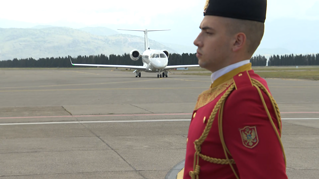
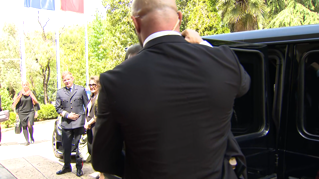
NATO Secretary General Mark Rutte arrives at the Podgorica Airport - Welcomed by Dragan Krapović, Minister of Defence of Montenegro
NATO Secretary General Mark Rutte arrives at the Podgorica Airport - Welcomed by Dragan Krapović, Minister of Defence of Montenegro
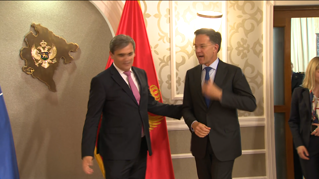
NATO Secretary General Mark Rutte meets with Milojko Spajić, Prime Minister of Montenegro
NATO Secretary General Mark Rutte meets with Milojko Spajić, Prime Minister of Montenegro
NATO Secretary General Mark Rutte meets with Milojko Spajić, Prime Minister of Montenegro
NATO Secretary General Mark Rutte meets with Milojko Spajić, Prime Minister of Montenegro
NATO Secretary General Mark Rutte meets with Milojko Spajić, Prime Minister of Montenegro
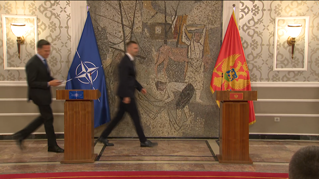
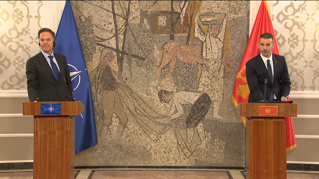
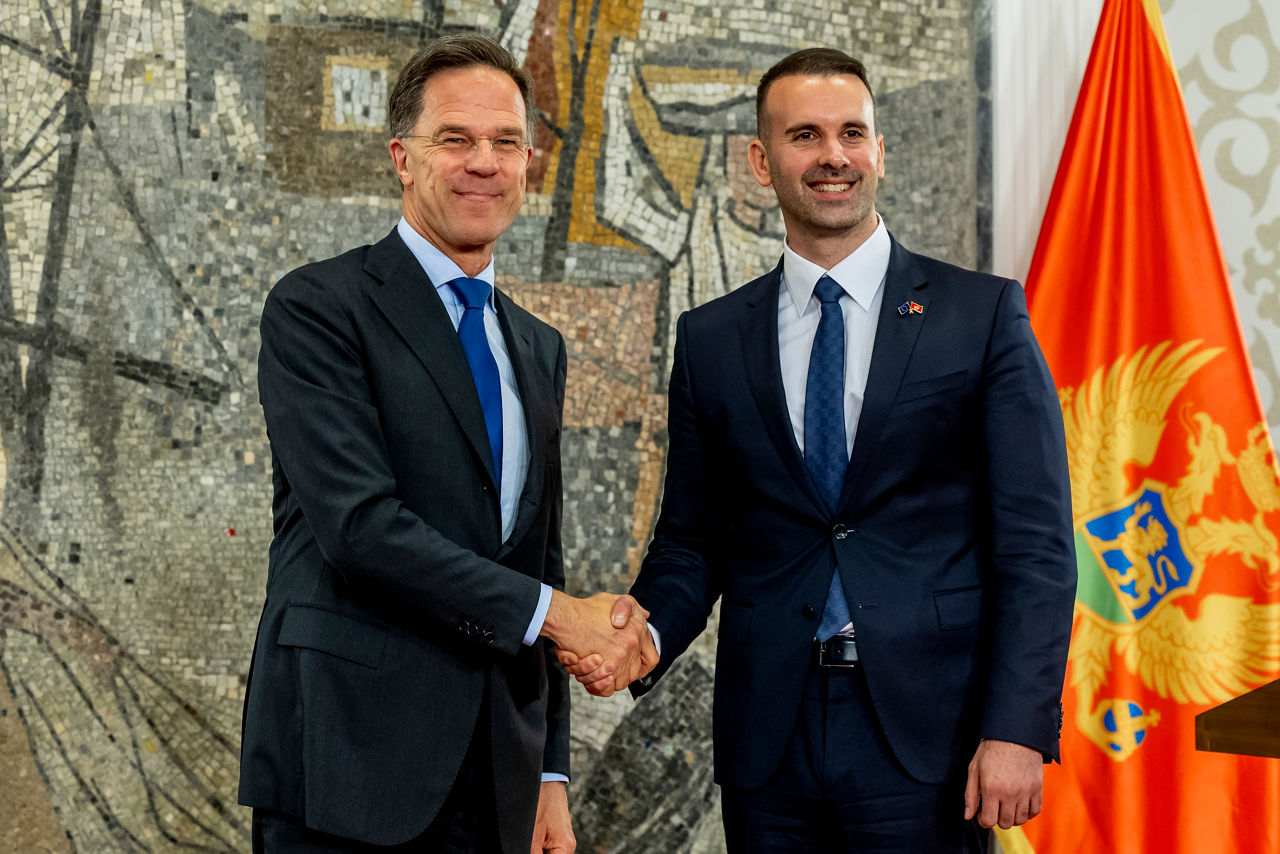
Joint press conference by NATO Secretary General Mark Rutte with Milojko Spajić, Prime Minister of Montenegro
Joint press conference by NATO Secretary General Mark Rutte with Milojko Spajić, Prime Minister of Montenegro
Joint press conference by NATO Secretary General Mark Rutte with Milojko Spajić, Prime Minister of Montenegro
Joint press conference by NATO Secretary General Mark Rutte with Milojko Spajić, Prime Minister of Montenegro
Mark Rutte, NATO Secretary General, visit to Montenegro. Press conference following the bilateral meeting with Prime Minister Milojko Spajić.
Joint press conference by NATO Secretary General Mark Rutte with Milojko Spajić, Prime Minister of Montenegro
Joint press conference by NATO Secretary General Mark Rutte with Milojko Spajić, Prime Minister of Montenegro
NATO Secretary General Mark Rutte meets with Ervin Ibrahimović, Minister of Foreign Affairs of Montenegro
NATO Secretary General Mark Rutte meets with Ervin Ibrahimović, Minister of Foreign Affairs of Montenegro
NATO Secretary General Mark Rutte meets with Ervin Ibrahimović, Minister of Foreign Affairs of Montenegro
NATO Secretary General Mark Rutte engages with students at the Faculty of Political Sciences of the University of Montenegro
NATO Secretary General Mark Rutte meets with Jakov Milatović, President of Montenegro
NATO Secretary General Mark Rutte meets with Jakov Milatović, President of Montenegro
NATO Secretary General Mark Rutte meets with Jakov Milatović, President of Montenegro
NATO Secretary General Mark Rutte meets with Jakov Milatović, President of Montenegro
NATO Secretary General Mark Rutte meets with Jakov Milatović, President of Montenegro
NATO Secretary General Mark Rutte meets with Jakov Milatović, President of Montenegro
NATO Secretary General Mark Rutte meets with Jakov Milatović, President of Montenegro
NATO Secretary General Mark Rutte meets with Jakov Milatović, President of Montenegro
NATO Secretary General Mark Rutte meets with Jakov Milatović, President of Montenegro
NATO Secretary General Mark Rutte meets with Jakov Milatović, President of Montenegro
NATO Secretary General visits Montenegro