
Close
Back


From now on you can download videos from our website
If you would also like to subscribe to the newsletter and receive our latest updates, click on the button below.
Enter the email address you registered with and we will send you a code to reset your password.
The password must be at least 12 characters long, no spaces, include upper/lowercase letters, numbers and symbols.
Click the button to return to the page you were on and log in with your new password.
08 December 2008
1 MIN READ
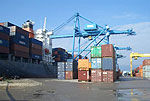
A Science for Peace and Security (SPS) -funded workshop held in Opatija, Croatia, on 8-12 December addressed the challenge of better dovetailing human behaviour and technological systems with view to enhancing maritime domain awareness in harbour and port security.
The workshop brought together a multidisciplinary group of experts from NATO, Partner and Mediterranean Dialogue countries with the aim of building synergy between the technological aspects of harbour security practice and research in the areas of human cognition, knowledge management and decision support systems.
Traditionally, systems engineering tends to emphasize the technological aspects of a system design, such as hardware, software and automation, often without considering that the systems will ultimately be used by people in the service of human objectives. Systems engineers and cognitive engineers also speak different technical languages. As such, human operational and decision-making factors are often left out of the design of tools, systems, procedures and work environments. Automated systems, that do not take human factors into account, do not necessarily simplify the user’s task. They can actually create risks in complex environments and potentially lead to errors with severe consequences for security.
In order to bridge this gap, the participants were presented with the approaches, methodology and technical language used in various disciplines. In addition, groups of participants representing the various disciplines involved mapped out ways to provide the capabilities and knowledge management tools necessary to coordinate and improve multi-agency prediction of and response to harbour emergencies. This ultimately requires a synergic relationship among technological solutions, human cognitive science and policy.
This SPS workshop builds on a previous one held in Tallinn, Estonia, in 2005, which identified a number of issues in need of further investigation in order to make harbour and port security more effective.