
Close
Back


From now on you can download videos from our website
If you would also like to subscribe to the newsletter and receive our latest updates, click on the button below.
Enter the email address you registered with and we will send you a code to reset your password.
The password must be at least 12 characters long, no spaces, include upper/lowercase letters, numbers and symbols.
Click the button to return to the page you were on and log in with your new password.
26 September 2007
1 MIN READ
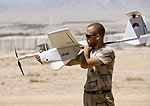
A NATO working group has now established common standards on the technical integrity of design and construction for fixed-wing Unmanned Aerial Vehicles, known as UAVs.
These common standards were recently drawn up in the framework NATO’s Conference of National Armaments Directors (CNAD).
Currently special fixed-wing Unmanned Aerial Vehicles with a take-off weight between 150 kg to 20 000 kg do not operate under a common set of aviation standards.
However, by agreeing to the new standards, UAVs from one country should enjoy easier access to other country’s airspace because a key uncertainty regarding the airworthiness of that UAV will have been resolved.
The NATO Working Group has over the past 18 months, in cooperation with UAV specialists from Canada, France, Germany, Italy, the Netherlands, Spain, Sweden, the United Kingdom and the United States put forward a set of codes which has been dubbed the “USAR - UAV Systems Airworthiness Requirements”.
The USAR code, which represents the first international initiative to agree on common UAV airworthiness rules, was based on a French proposal to take a current standard for manned aircraft and adapt it to suit the characteristics of UAVs.
The initiative is being formally considered by all the member countries for approval as a NATO Standardized Agreement (STANAG), though it is anticipated that some member countries will adopt the USAR for their internal use even before a decision has been formally adopted by NATO.
Unmanned Aerial Vehicles are mainly used for military purposes, such as combat situations to perform surveillance over areas and other intelligence gathering operations in theatre. A small number of UAVs are also used for civilian purposes such as natural disasters.