Close
Back


From now on you can download videos from our website
If you would also like to subscribe to the newsletter and receive our latest updates, click on the button below.
Enter the email address you registered with and we will send you a code to reset your password.
The password must be at least 12 characters long, no spaces, include upper/lowercase letters, numbers and symbols.
Click the button to return to the page you were on and log in with your new password.
20 May 2026
2 MIN READ
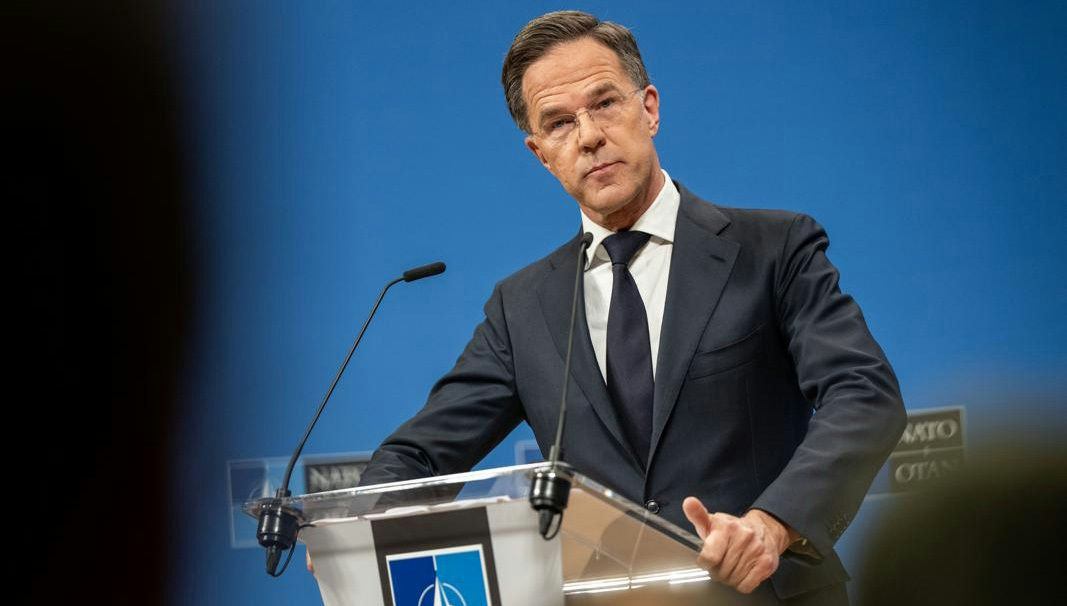
NATO Foreign Ministers will meet in Helsingborg on Thursday and Friday (21-22 May) to finalise preparations for the Ankara Summit. Speaking ahead of the meeting in Brussels on Wednesday (20 May), NATO Secretary General Mark Rutte highlighted the need to deliver on the commitments made at the Summit in The Hague last year, where Allies committed to increase defence spending to 5% of GDP by 2035.
“The question is no longer whether we need to do more. The question is how quickly Allies can turn commitments into capabilities,” he said, calling for steady, sustained increases in investment and “a credible path” to delivery. Allies need to ramp up defence industrial production on both sides of the Atlantic, and strengthen warfighting capabilities, he added.
The Secretary General stressed that shifting the balance of responsibilities within the Alliance is part of ensuring NATO remains ready. He noted how Europe and Canada are investing more and take more responsibility for conventional defence. He noted that this development is also reflected in NATO’s command structure, where Europe will lead on all three Joint Force Commands, while the United States will lead the three component commands – contributing to a stronger and more sustainable transatlantic Alliance. “We will continue to see this transformation to a stronger Europe in a stronger NATO: NATO 3.0,” said Mr Rutte.
Another priority for the Ankara Summit is NATO’s continued support for Ukraine. On Thursday, the Foreign Ministers will be joined in Helsingborg by Ukrainian Foreign Minister Andrii Sybiha, to discuss how to ensure support for Ukraine remains substantial, sustainable and predictable for the long term.
Secretary General Rutte concluded by reiterating that delivery will be the central theme in Helsingborg: “Delivery of our deterrence and defence, of a stronger, fairer NATO, delivery of support for Ukraine, and ultimately of the security of one billion people across the Alliance.”


NATO Secretary General Mark Rutte briefs the press ahead of the meeting of NATO Ministers of Foreign Affairs
NATO Secretary General Mark Rutte briefs the press ahead of the meeting of NATO Ministers of Foreign Affairs
NATO Secretary General Mark Rutte briefs the press ahead of the meeting of NATO Ministers of Foreign Affairs
NATO Secretary General Mark Rutte briefs the press ahead of the meeting of NATO Ministers of Foreign Affairs
NATO Secretary General Mark Rutte briefs the press ahead of the meeting of NATO Ministers of Foreign Affairs
Pre-ministerial press conference of the NATO Secretary General