
Close
Back


From now on you can download videos from our website
If you would also like to subscribe to the newsletter and receive our latest updates, click on the button below.
Enter the email address you registered with and we will send you a code to reset your password.
The password must be at least 12 characters long, no spaces, include upper/lowercase letters, numbers and symbols.
Click the button to return to the page you were on and log in with your new password.
29 December 2023
1 MIN READ
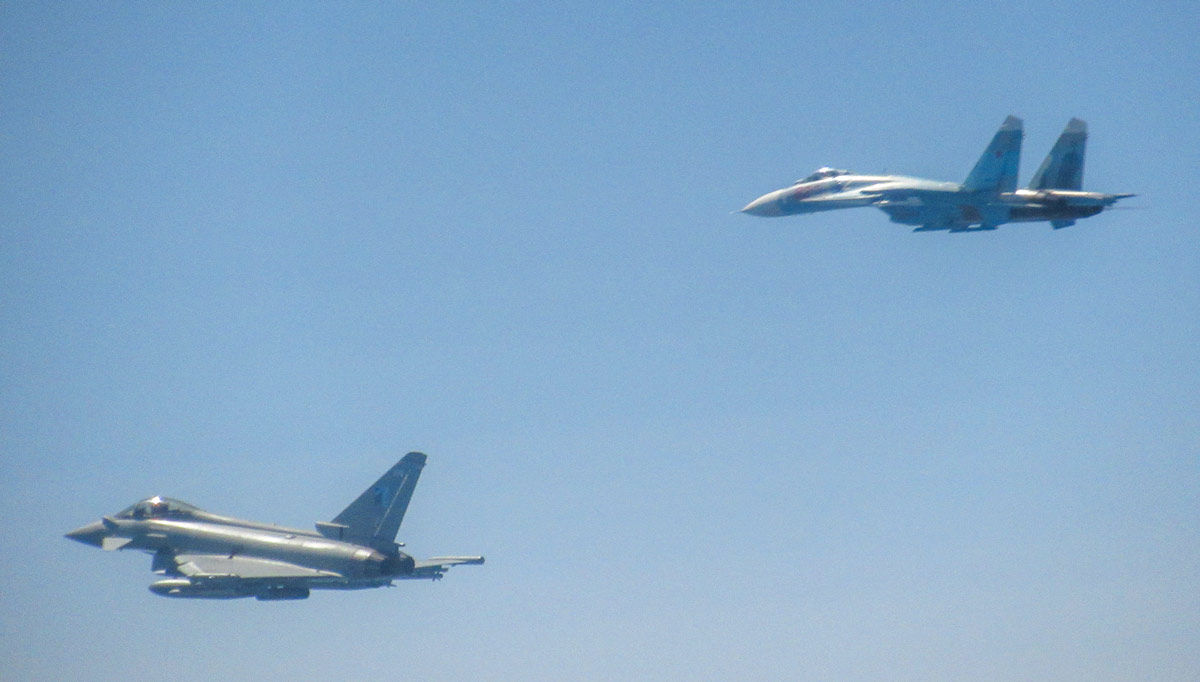
In 2023, NATO air forces across Europe scrambled well over 300 times to intercept Russian military aircraft approaching Alliance airspace, with most intercepts occurring over the Baltic Sea. NATO has standing air-policing missions that calls for Allied jets to scramble when there are signs of Russian military planes approaching Allied airspace in unpredictable ways.
Along NATO’s eastern flank, Russian military aircraft have a history of not transmitting a transponder code indicating their position and altitude, not filing a flight plan, and not communicating with air traffic controllers. The vast majority of aerial encounters between NATO and Russian jets were safe and professional. Breaches of NATO airspace by Russian military aircraft remained rare and generally of short duration.
“Russia’s war against Ukraine has created the most dangerous security situation in Europe in decades,” said acting NATO Spokesperson Dylan White. “NATO fighter jets are on duty around the clock, ready to scramble in case of suspicious or unannounced flights near the airspace of our Allies. Air policing is an important way in which NATO provides security for our Allies.”
In the wake of Russia’s war in Ukraine, NATO has substantially reinforced its air defences on its eastern flank, including with more fighter jets, surveillance flights and ground-based air defences. After repeated Russian strikes on Ukrainian infrastructure very close to NATO territory, Allies deployed extra fighter jets to Romania. In October, after subsea pipelines ruptured in the Baltic Sea, NATO sent additional capabilities to the region. This year, NATO also held its biggest ever air exercise, with over 250 aircraft training for the collective defence of the Alliance during “Air Defender 23”.