
Close
Back


From now on you can download videos from our website
If you would also like to subscribe to the newsletter and receive our latest updates, click on the button below.
Enter the email address you registered with and we will send you a code to reset your password.
The password must be at least 12 characters long, no spaces, include upper/lowercase letters, numbers and symbols.
Click the button to return to the page you were on and log in with your new password.
16 June 2022
1 MIN READ
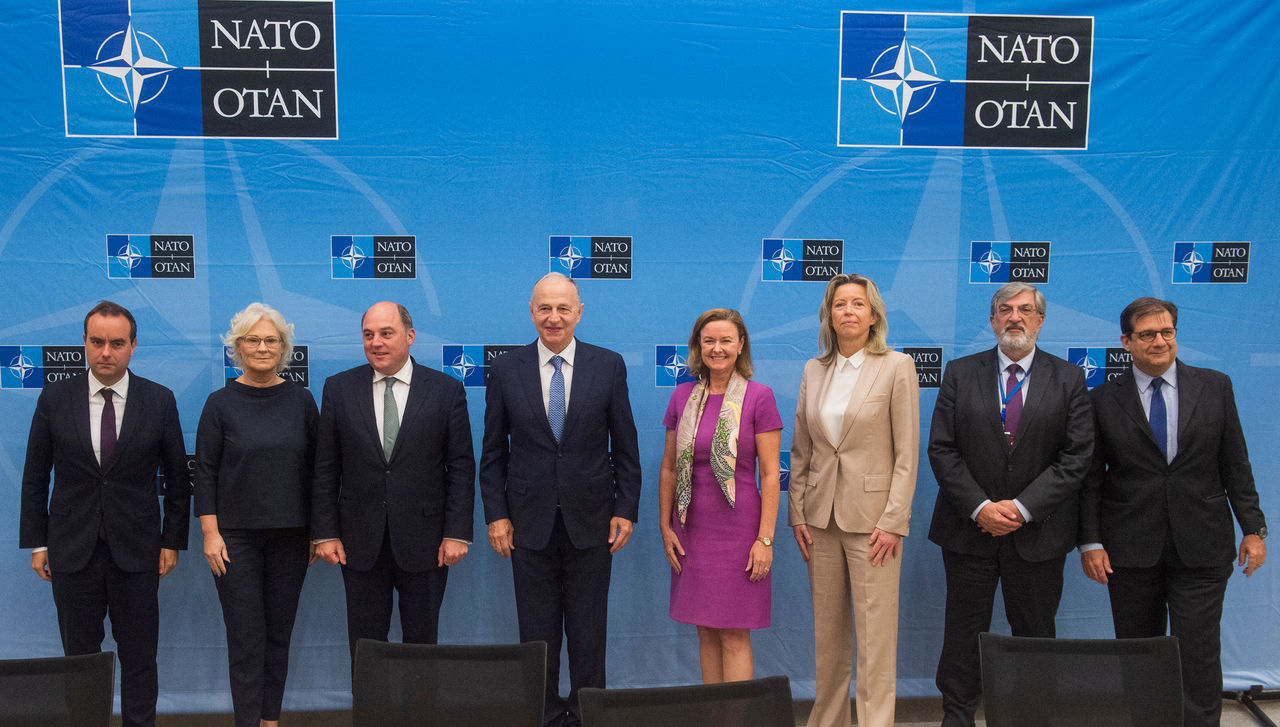
In the margins of the NATO Defence Ministerial meeting on 16 June, the Ministers of France, Germany, Greece, Italy, the Netherlands and the United Kingdom dedicated 26.7 million EUR to define the future of their helicopter fleets under NATO’s Next Generation Rotorcraft Capability (NGRC) project. In cooperation with industry, the participants will start from a clean sheet to explore how to match their needs with the latest technology on the market, looking at options such as hybrid and electric propulsion, a systematic open system architecture, and the delivery of radically improved flight characteristics.
“This is a clear example of NATO and Allies working together to harness fast-changing technology for the benefit of our military capabilities. By investing our resources and channelling our development through a multinational framework, we are making sure Allies will be equipped with the best available equipment”, stressed the NATO Deputy Secretary General Mircea Geoană.
Medium multi-role helicopters have a wide range of civilian and military uses, including transportation of people and equipment, medical evacuation, search and rescue. A lot of this type of rotorcraft currently operated by Allies will reach the end of their lifecycle in the years ahead. The NGRC Concept Stage will provide the foundation for Allies to develop and field the next generation of these indispensable workhorses. The NATO Support and Procurement Agency (NSPA) will execute the Concept Stage on behalf of the participants.
The NGRC constitutes one of NATO’s multinational High Visibility Projects and demonstrates NATO Allies’ commitment to maintain a technological edge and to pursue multinational cooperation.