
Close
Back


From now on you can download videos from our website
If you would also like to subscribe to the newsletter and receive our latest updates, click on the button below.
Enter the email address you registered with and we will send you a code to reset your password.
The password must be at least 12 characters long, no spaces, include upper/lowercase letters, numbers and symbols.
Click the button to return to the page you were on and log in with your new password.
25 May 2022
1 MIN READ
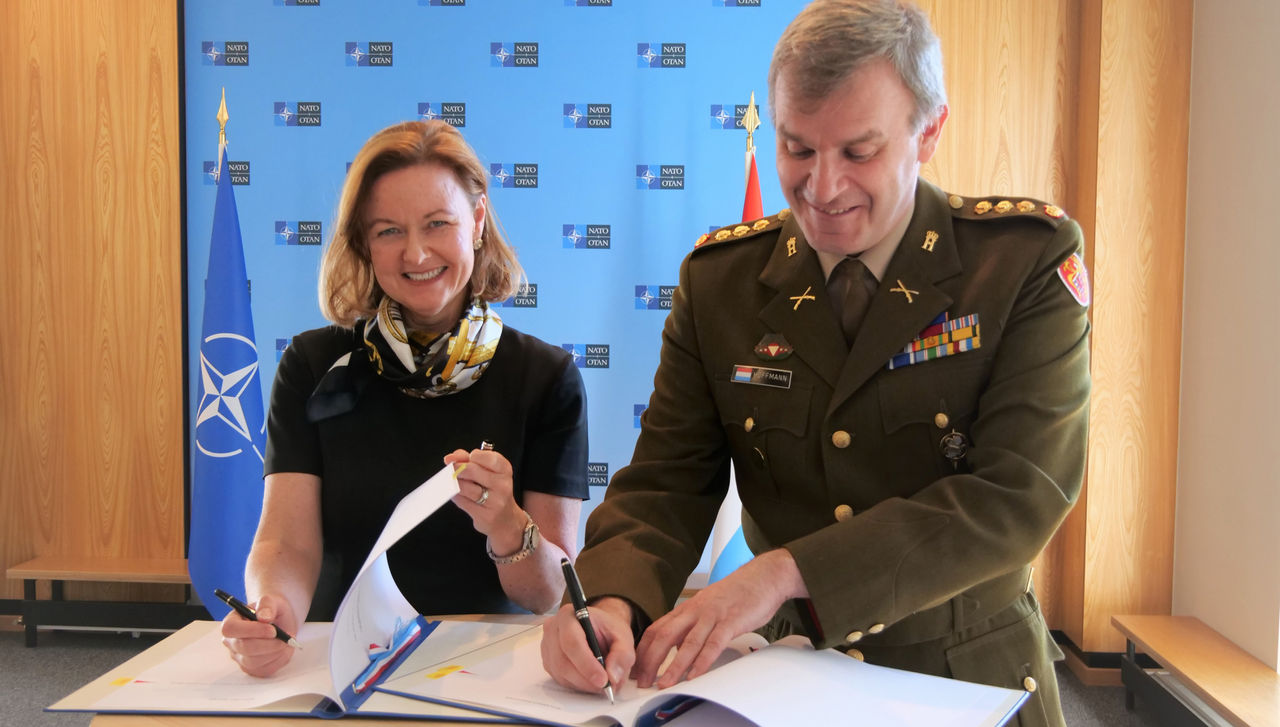
On 25 May 2022, Luxembourg declared its intent to provide around 5M EUR between 2023 and 2025 to help accelerate the development of NATO’s first multi-domain surveillance capability, known as the Alliance Future Surveillance and Control (AFSC) initiative.
The AFSC initiative is the largest and most complex capability effort that NATO has taken on to date, currently in it its Concept Development Stage, managed by the NATO Support and Procurement Agency (NSPA) and funded by all 30 Allies under NATO Common Funding. The Alliance is studying a range of emerging technologies and different options as a follow-on capability to the AWACS aircraft – NATO’s ‘eyes in the sky’, when they retire in 2035. This may include a mixture of systems in the air, land, sea, space and cyber domains. Key common characteristics include the use of ‘combat clouds,’ open architectures, autonomy, manned/unmanned teaming, and commercial space-based capabilities.
In early April 2022, NSPA awarded three separate Risk Reduction and Feasibility Study (RRFS) contracts to three separate industry teams: the ABILITI team led by Boeing, the ASPAARO team co-led by Airbus Defence & Space and Northrup Grumman, and the team led by General Atomics Aeronautical Systems. Leading defence industries will provide the Alliance with a clearer picture on performance and feasibility of initial concepts. This will allow Allies to select the final design for the future surveillance and control capability and make decisions on future acquisitions.
The AFSC initiative is a collective endeavor by all NATO Allies. The active contribution and commitment by individual Allies like Luxembourg have been essential to advance the project within agreed timelines and budget. Several Allies are contributing to the AFSC initiative through research studies, subject matter experts and resourcing.