
Close
Back


From now on you can download videos from our website
If you would also like to subscribe to the newsletter and receive our latest updates, click on the button below.
Enter the email address you registered with and we will send you a code to reset your password.
The password must be at least 12 characters long, no spaces, include upper/lowercase letters, numbers and symbols.
Click the button to return to the page you were on and log in with your new password.
21 April 2020
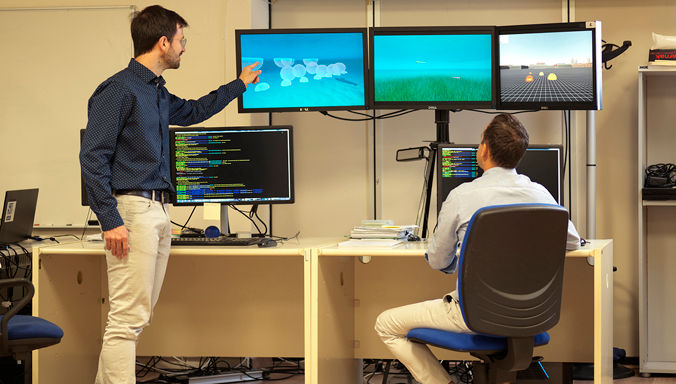
NATO has tapped into its pool of defence scientists – the largest such network in the world - to support the COVID-19 emergency response.
The NATO Chief Scientist, Dr Bryan Wells, has just launched the “NATO Chief Scientist Challenge”, calling for solutions in virus detection, improved situational awareness, decontamination, resilience and the post-COVID-19 future. The Challenge was sent out to over 6000 scientists in NATO’s network. Proposals, from research articles to prototypes, are expected by the end of April. Working with NATO Allies, partners and staff, the Office of the Chief Scientist will help turn the best proposals into reality.
The NATO Science and Technology Organization supports the COVID-19 response in other ways as well. It has set up a classified collaborative platform where scientists from Allied and partner nations can share contributions to the crisis response. Exchange of knowledge and potential solutions is also facilitated by the NATO Collaboration Support Office in Paris, which coordinates relevant research, including virtual reality scenarios for emergency medical care, reducing the lifespan of viruses by treating surfaces and fabrics with polymer coating, laser testing of saliva samples, etc. Finally, NATO is using the capabilities of its own laboratory, the Centre for Maritime Research and Experimentation in La Spezia, which conducts new research in big data analytics, modelling and simulation for decision-making.