
Close
Back


From now on you can download videos from our website
If you would also like to subscribe to the newsletter and receive our latest updates, click on the button below.
Enter the email address you registered with and we will send you a code to reset your password.
The password must be at least 12 characters long, no spaces, include upper/lowercase letters, numbers and symbols.
Click the button to return to the page you were on and log in with your new password.
27 November 2019
1 MIN READ
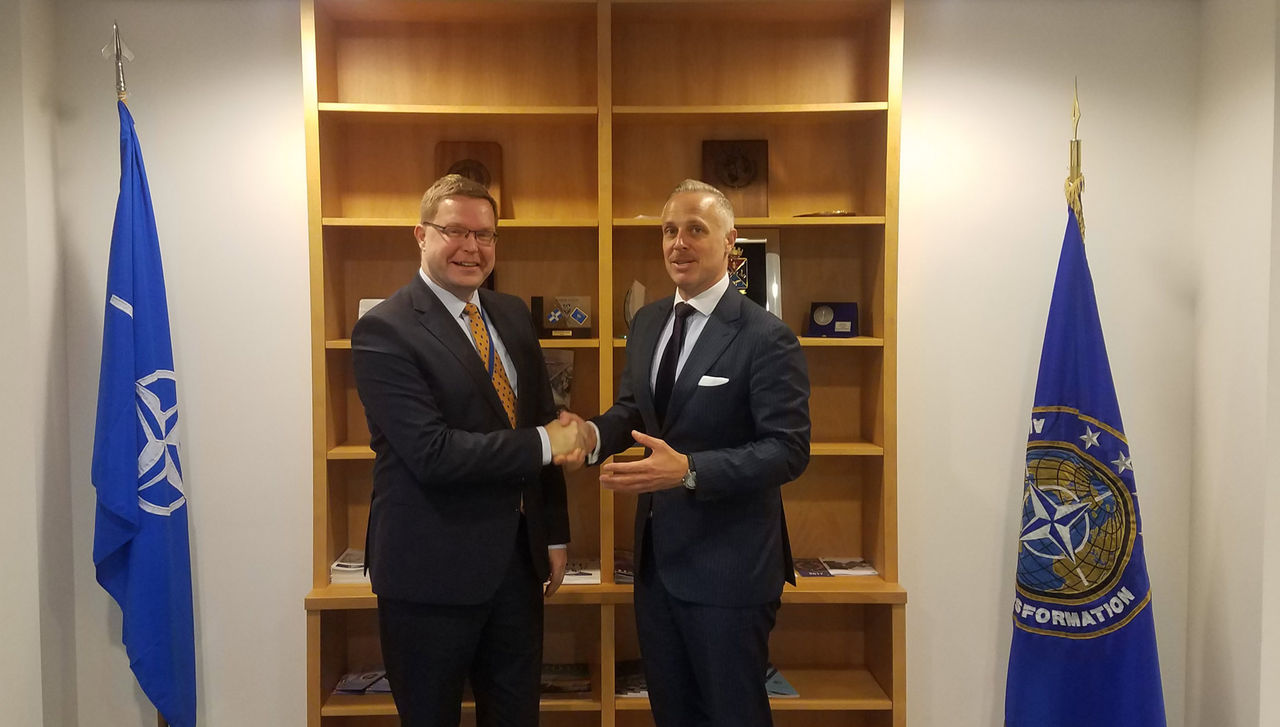
Allies and Australia’s Cyber Ambassador, Dr. Tobias Feakin, exchanged views on the evolving cyber threat landscape and ways of responding to it during a Cyber Defence Committee meeting taking place at NATO Headquarters on 29 November.
Chairing the meeting, the Head of the Emerging Security Challenges Division’s Cyber Defense Section, Christian Liflander, stressed that “addressing cyber threats is a global challenge and Australia represents a vital link to the Asia Pacific region.”
Allies recognized the essential role Australia plays in supporting a norms based, predictable and secure cyberspace. During his briefing, Ambassador Feakin elaborated on Australia’s approach to protecting critical technology , its approach to calling out malicious cyber behavior by states as well as capacity building initiatives in the region.
NATO works with a number of partner countries to enhance international security. This is based on shared values and common approaches to cyber defence. Ambassador Feakin’s visit follows discussions between the NATO Secretary General and the Australian Foreign Minister in Canberra this summer which highlighted the importance of close co-ordination in cyber defence.