
Close
Back


From now on you can download videos from our website
If you would also like to subscribe to the newsletter and receive our latest updates, click on the button below.
Enter the email address you registered with and we will send you a code to reset your password.
The password must be at least 12 characters long, no spaces, include upper/lowercase letters, numbers and symbols.
Click the button to return to the page you were on and log in with your new password.
26 June 2019
1 MIN READ
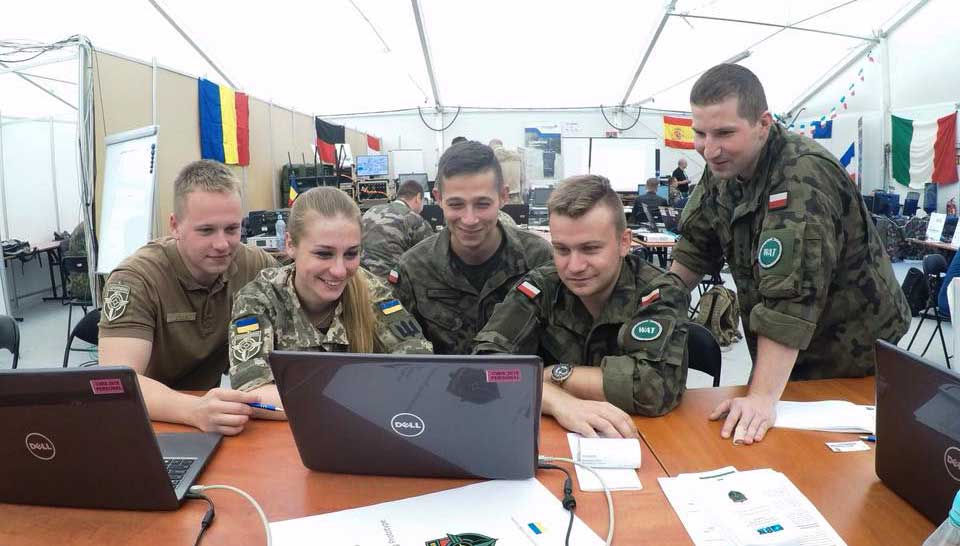
NATO’s annual Coalition Warrior Interoperability Exercise (CWIX) has just concluded at the Joint Force Training Centre in Bydgoszcz, Poland. Over the last three weeks, more than 1,500 engineers, scientists, industry representatives and military operators from NATO Allies, partners and organizations took part in the event, which was the largest of this series of exercises to date.
CWIX, which is managed by Allied Command Transformation (ACT), aims to test and improve the ability of Allied and partner forces and their systems to operate together and generate a common operational picture. At this year’s edition of the exercise, the participants executed more than 7,000 interoperability tests between 300 different military capabilities.
For example Germany, which leads NATO’s Spearhead Force (the VJTF) this year and will lead it again in 2023, used the exercise to ensure that its equipment is fully compatible with that of other Allies contributing to the NATO force. One of the tests saw German and Dutch service members improving the connectivity of their national systems and their ability to receive, analyse and share reconnaissance data. Another experiment at this year’s exercise aimed to improve the way that medical records are passed between NATO nations to speed up the delivery of medical support.
In addition to enhancing current capabilities, CWIX enables participants to test new capabilities and experiment with emerging technologies. As such, the exercise also contributes to NATO’s efforts to drive forward military innovation.