
Close
Back


From now on you can download videos from our website
If you would also like to subscribe to the newsletter and receive our latest updates, click on the button below.
Enter the email address you registered with and we will send you a code to reset your password.
The password must be at least 12 characters long, no spaces, include upper/lowercase letters, numbers and symbols.
Click the button to return to the page you were on and log in with your new password.
13 February 2019
1 MIN READ
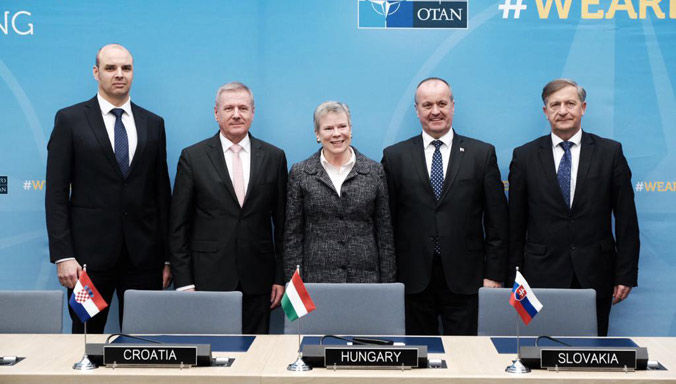
On Wednesday (13 February 2019), the Defence Ministers from Croatia, Hungary, Slovakia and Slovenia signed a Letter of Intent (LOI) to establish a Regional Special Operations Component Command (R-SOCC) in the margins of the meetings of NATO Defence Ministers in Brussels. Partner nation Austria will sign the LOI immediately following the NATO Defence Ministerial Meeting. This makes this initiative another example of close cooperation between NATO Allies and partners.
Under the leadership of Hungary, the four European Allies and partner nation Austria will work together to form a deployable R-SOCC for Small Joint Operations. This command will dramatically increase the ability of these five nations to effectively employ their Special Forces. The non-permanent structure of the R-SOCC enables each participant to use its own contributions separately, while benefitting from the integrated R-SOCC structure once activated for a deployment.
NATO Deputy Secretary General Rose Gottemoeller praised this initiative, stating that it presents “a significant step forward in strengthening Special Operation Forces capacities in the region, and towards a fully integrated multinational regional command element.”
The new multinational command will be developed in line with NATO standards, leveraging the expertise of NATO’s Special Operations Headquarters in Mons, Belgium. While primarily intended for NATO and EU operations, the command could participate in other multilateral missions, exercises or trainings.