
Close
Back


From now on you can download videos from our website
If you would also like to subscribe to the newsletter and receive our latest updates, click on the button below.
Enter the email address you registered with and we will send you a code to reset your password.
The password must be at least 12 characters long, no spaces, include upper/lowercase letters, numbers and symbols.
Click the button to return to the page you were on and log in with your new password.
31 January 2019
1 MIN READ
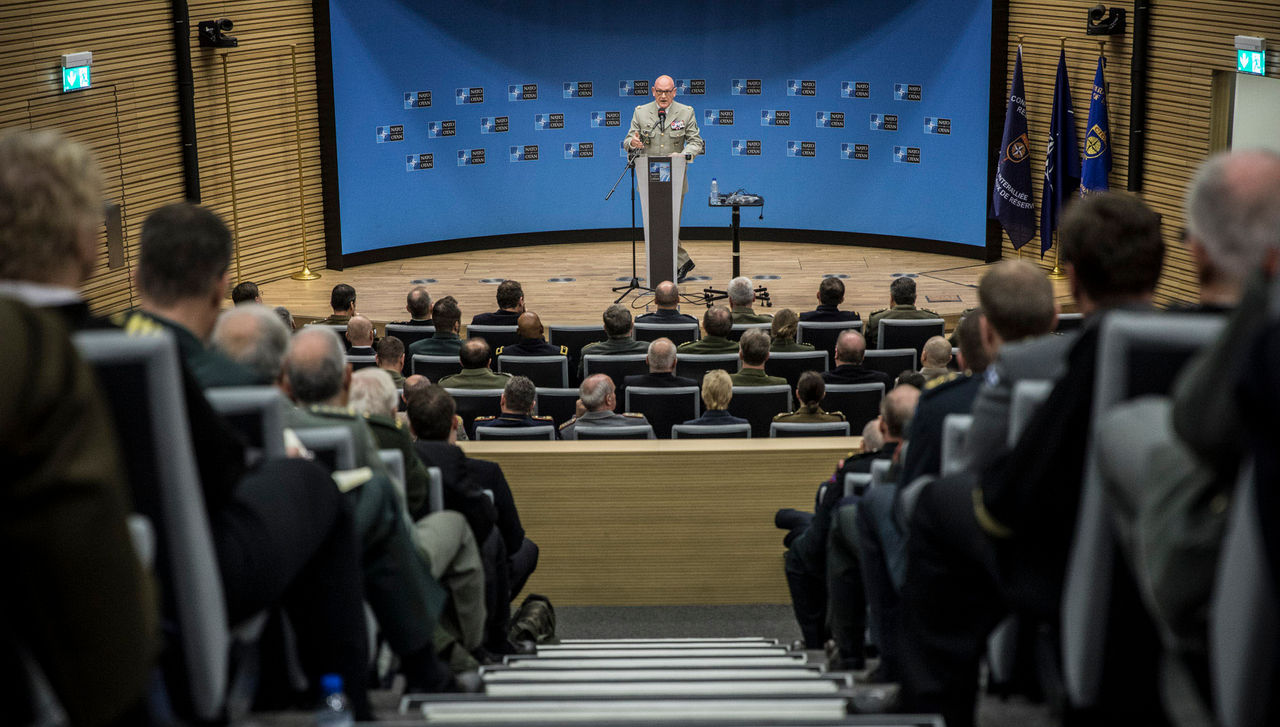
From 29 to 31 January, NATO hosted simultaneous meetings of the National Reserve Forces Committee (NRFC) and the Confédération Interalliée des Officiers de Réserve (CIOR). Both organisations renewed their joint Memorandum of Understanding (MoU) to continuously improve cooperation.
On 30 January, the joint session started off with a keynote address by the Deputy Chief of Staff of Allied Command Operations, Lieutenant General Olivier Rittimann. The General highlighted the value of Reservists as “a capable, credible and available force which continues to be an important element of the Force structure. For some Nations reservists make up almost 50% of their National forces which is understandable when requirements increase but defence spending does not follow. Whereas 20 years ago, reservists were considered more of a last resort, nowadays they are considered incremental to any Nation’s Armed Forces, providing the manpower and specialised skill to supplement regular armed forces”.
The meeting was also an opportunity for the NRFC Chairman and the CIOR President, respectively Brigadier General Robert Głąb (POL) and Colonel (R) Chris Argent (UK), to renew their joint Memorandum of Understanding (MoU). The result of a year’s work, the MoU aims to establish a cooperative and productive relationship between the two organisations as well as outline their partnership and channels of communication. “The NRFC and CIOR are complementary organisations, the first focusing on the Reserves and the second on Reservists. It only made sense to renew this MoU to make sure that where possible we complement each other. The aim is also where and when possible to present a united front and joint advice to the NATO Military Committee. We can only be stronger together”, added Brigadier General Robert Głąb.
NATO has always recognised the importance of national Reserve Forces and the compelling requirement to better understand and exploit the inherent potential of reservists and Reserve Forces. NATO works on reservist issues through three different entities: the National Reserve Forces Committee (NRFC), the Interallied Confederation of Reserve Officers (known by its French acronym CIOR) and the Interallied Confederation of Medical Reserve Officers (CIOMR).