
Close
Back


From now on you can download videos from our website
If you would also like to subscribe to the newsletter and receive our latest updates, click on the button below.
Enter the email address you registered with and we will send you a code to reset your password.
The password must be at least 12 characters long, no spaces, include upper/lowercase letters, numbers and symbols.
Click the button to return to the page you were on and log in with your new password.
28 June 2018
1 MIN READ
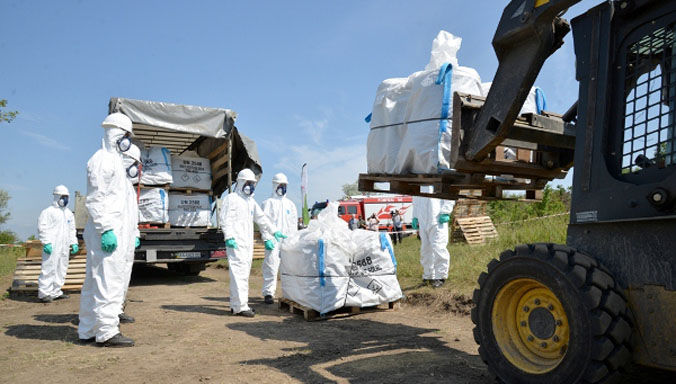
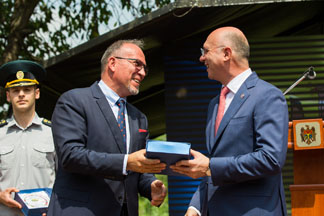
On 28 June 2018 took place the closing ceremony of another NATO-sponsored project focused on the disposal of pesticides and dangerous chemicals in the Republic of Moldova.
As part of the project, 1269 tons of chemicals were collected and transported for destruction in Poland, with NATO’s support. A last batch of 31 tons of pesticides collected from Singerei, Drochia, Edinet districts and Bălţi Municipality were evacuated on the last day from the regional central warehouse from Alexandreni village (situated in the centre of R. Moldova).
The total cost of the project was 2.2 million euros, covered through a NATO Trust Fund Fund with Romania as lead nation. The Trust Fund garnered contributions from 18 NATO Allies and partners (Belgium, Bulgaria, Czech Republic, Estonia, Finland, Germany, Ireland, Italy, Japan, Latvia, Lithuania, Luxembourg, Norway, Netherland, Poland, Romania, Sweden and Turkey).
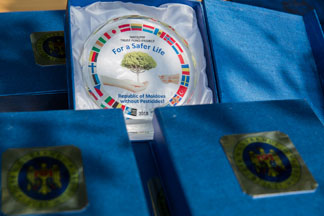
The project is part of a three-phase NATO/Partnership Trust Fund initiative addressing the threat posed by obsolete pesticides to Moldovan people. It was developed by NATO and the Moldovan Ministry of Defence in cooperation with other international organisations, including the United Nations Environment Programme, the Regional Environment Centre for Central and Eastern Europe, the United Nations Economic Commission for Europe, the United Nations Development Programme and the Organization for Security and Co-operation in Europe.