
Close
Back


From now on you can download videos from our website
If you would also like to subscribe to the newsletter and receive our latest updates, click on the button below.
Enter the email address you registered with and we will send you a code to reset your password.
The password must be at least 12 characters long, no spaces, include upper/lowercase letters, numbers and symbols.
Click the button to return to the page you were on and log in with your new password.
20 April 2018
2 MIN READ
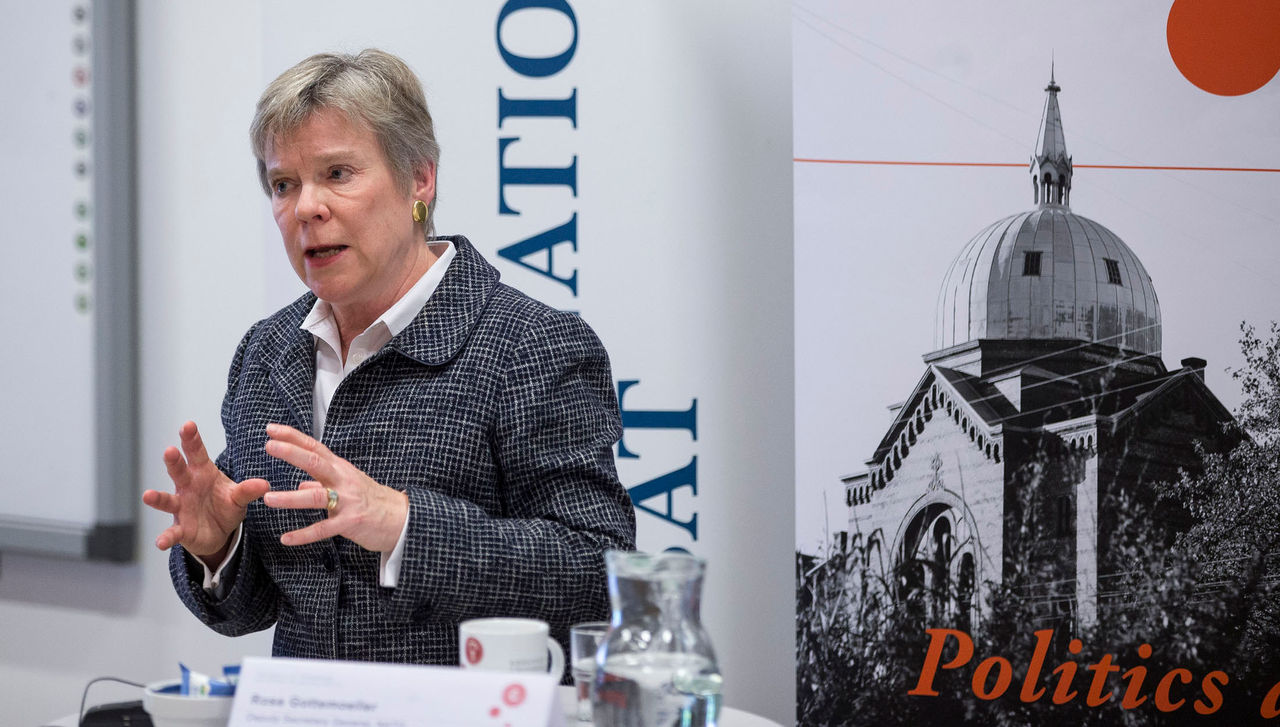
NATO Deputy Secretary General Rose Gottemoeller thanked Denmark for its contributions to NATO during a visit to Copenhagen on Friday (20 April 2018)
Addressing students, faculty staff and members of the public at the University of Copenhagen, Ms Gottemoeller outlined how NATO has been dealing with the challenges posed by terrorism and violent extremism, and a more aggressive Russia in recent years and discussed preparations for NATO’s upcoming Summit meeting in July.
In relation to fighting terrorism, the Deputy Secretary General highlighted NATO’s efforts to project stability and its role in the Global Coalition to Defeat ISIS. Recognizing that much remains to be done in relation to conflict and instability in the Middle East, Gottemoeller highlighted the successes that have been achieved by NATO as well as through the broader international effort that has significantly diminished ISIS.
Speaking about NATO’s efforts to deter and defend against a more aggressive Russia, the Deputy Secretary General highlighted the four battlegroups that have been deployed in the Baltic States and Poland, thanking Denmark for its contributions in Estonia. Recognizing that these battlegroups represent a crucial deterrent element, Gottemoeller explained that NATO is now focused on how it would reinforce NATO forces in the East of the Alliance in the event of a crisis. This includes the adaptation of the NATO Command Structure to ensure it is fit for purpose and discussions on military mobility – an area of work that NATO is pursuing in cooperation with the European Union.
Turning to how threats have shifted in recent years, Gottemoeller noted the increase in the use of asymmetric or hybrid tactics including cyber-attacks and disinformation campaigns. While spreading in virtual space, these methods can have significant consequences in the real world and have become a regular part of conversations about how to ensure security and stability in the 21st century. NATO has already recognized cyber as a domain of operations alongside land, sea, and air.
The Deputy Secretary General concluded her remarks by encouraging students to consider how new technologies pose opportunities when it comes to collective security. “We must think seriously about what some of the benefits of these new types of technology might be.”
During her visit, the NATO Deputy Secretary General met with the Minister of Defence and of Nordic Cooperation Claus Hjort Frederiksen and the Minister of Foreign Affairs Anders Samuelsen. She also took part in a seminar on Danish Foreign and Security Policy Strategy at the Ministry of Foreign Affairs and paid her respects at the Monument for Denmark’s International Effort since 1948.