
Close
Back


From now on you can download videos from our website
If you would also like to subscribe to the newsletter and receive our latest updates, click on the button below.
Enter the email address you registered with and we will send you a code to reset your password.
The password must be at least 12 characters long, no spaces, include upper/lowercase letters, numbers and symbols.
Click the button to return to the page you were on and log in with your new password.
05 December 2017
1 MIN READ
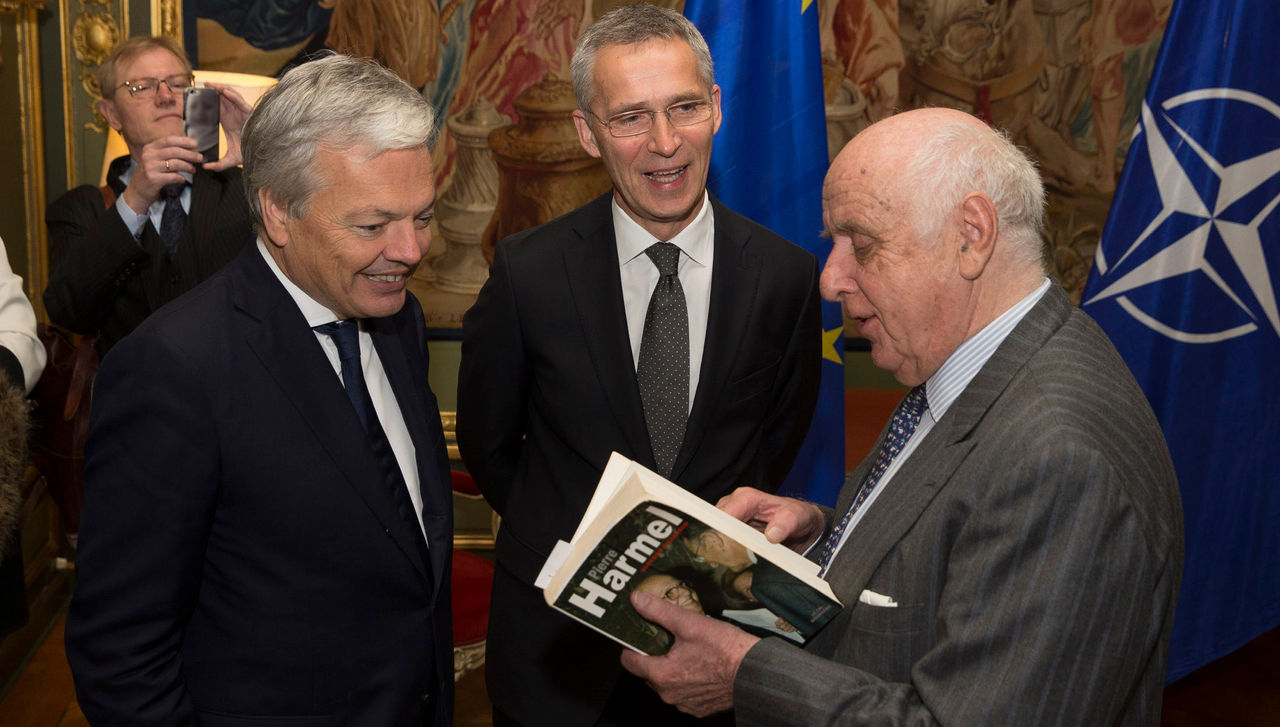
The NATO Secretary General, Mr. Jens Stoltenberg, delivered a keynote speech today at an event sponsored by Belgian Ministry of Foreign Affairs to commemorate the 50th anniversary of the “Harmel Report.”
Secretary General Stoltenberg said the Harmel Report has stood the test of time “because it is historically important and currently relevant.” The conclusions of the 1967 Report are summarized as the “dual-track” approach in which NATO maintained a strong defence and deterrence posture, but also engaged in meaningful dialogue to ease tensions.
“In the past few years,” Secretary General Stoltenberg said, “NATO has implemented the biggest increase of our collective defence since the end of the Cold War … But we have not forgotten the lessons from the Harmel Report about the need for dialogue as well. After two years without any meetings, the NATO-Russia Council has met six times since April 2016. In our meetings we have discussed a range of topics, such as Ukraine, Afghanistan, and transparency and risk reduction. Our dialogue with Russia is not easy. But that is exactly why it is so important.”
Secretary General Stoltenberg also noted “adaptation” as a wider theme of the Harmel Report, underscoring that this was another example of the report’s continued relevance. “The report makes clear that a dynamic and vigorous Alliance must constantly adapt to changing conditions. And NATO’s adaptability remains one of our greatest strengths. We continue to adapt to the most serious security challenges in a generation.”