
Close
Back


From now on you can download videos from our website
If you would also like to subscribe to the newsletter and receive our latest updates, click on the button below.
Enter the email address you registered with and we will send you a code to reset your password.
The password must be at least 12 characters long, no spaces, include upper/lowercase letters, numbers and symbols.
Click the button to return to the page you were on and log in with your new password.
05 May 2017
1 MIN READ
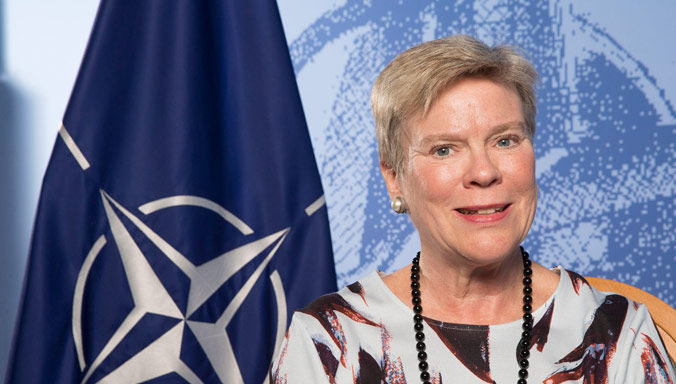
NATO Deputy Secretary General Rose Gottemoeller began a two-day visit to Austria on Friday (5 May 2017) with a speech at the Vienna Centre for Disarmament and Non-Proliferation (VCDNP). Addressing a seminar on ‘NATO’s Enduring Commitment to the Non-Proliferation Treaty’, Ms. Gottemoeller outlined the Alliance’s efforts to preserve peace, limit proliferation and reduce the number of nuclear weapons.
The Deputy Secretary General stressed that nuclear and conventional arms control agreements help to keep the world a more peaceful place and will always have NATO’s support. The nuclear Non-Proliferation Treaty, for instance, bolsters Allies’ common, collective defence. In signing the NPT, non-nuclear powers agreed to refrain from acquiring nuclear weapons, and in return nuclear powers would strive to reduce and eventually eliminate their own weapons. “Without the NPT, we would have had no impetus to peacefully address the Cold War overbuild of nuclear weapons – over 70,000 at the peak of the building frenzy of the 1960s,” said Ms. Gottemoeller.
The Deputy Secretary General emphasised that all Allies are strong supporters of the strategic arms reduction process. The Intermediate-Range Nuclear Forces Treaty (INF Treaty), in particular, is a crucial element of Euro-Atlantic security, and eliminated an entire category of nuclear weapons that threatened Europe.
On Saturday (6 May), the Deputy Secretary General will participate in a panel session on NATO-Russia relations, as part of a diplomatic workshop hosted by the VCDNP and the James Martin Center for Nonproliferation Studies.