
Close
Back


From now on you can download videos from our website
If you would also like to subscribe to the newsletter and receive our latest updates, click on the button below.
Enter the email address you registered with and we will send you a code to reset your password.
The password must be at least 12 characters long, no spaces, include upper/lowercase letters, numbers and symbols.
Click the button to return to the page you were on and log in with your new password.
15 March 2017
1 MIN READ
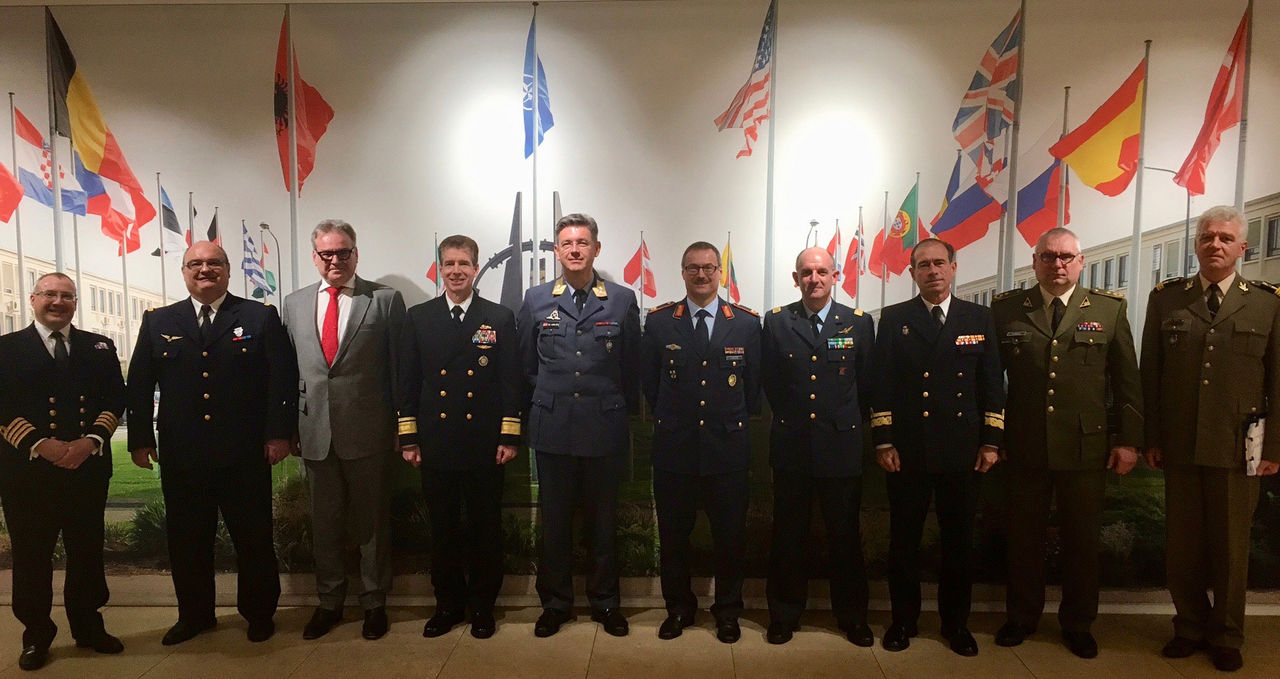
On 15 March 2017, France, Germany, Italy, Lithuania, Spain, the United Kingdom and the United States signed a Letter of Intent confirming the willingness for collective fuel support to NATO operations and exercises. This was the result of a smart defence initiative on multinational fuel handling capability led by France under the auspices of the NATO Petroleum Committee.
The capability, known as Modular Combined Petroleum Unit (MCPU), aims to provide in-theatre fuel supply to NATO troops. The MCPU forms a high readiness unit, part of the Joint Logistic Support Group, deployable on a case-by-case basis in a non-permissive environment and at an early stage of an operation or exercise. The unit was tested and certified during the high visibility exercise Trident Juncture 15.The intent is to continue to field the capability to train personnel and to validate fuels interoperability requirements and procedures.
The initiative began in 2012 and completed in March 2017. Several other NATO and partner nations have expressed their firm interest in joining this multinational fuels capability. A Coordination Board reporting to the Petroleum Committee will lead the future work on the MCPU.