
Close
Back


From now on you can download videos from our website
If you would also like to subscribe to the newsletter and receive our latest updates, click on the button below.
Enter the email address you registered with and we will send you a code to reset your password.
The password must be at least 12 characters long, no spaces, include upper/lowercase letters, numbers and symbols.
Click the button to return to the page you were on and log in with your new password.
24 February 2017
1 MIN READ
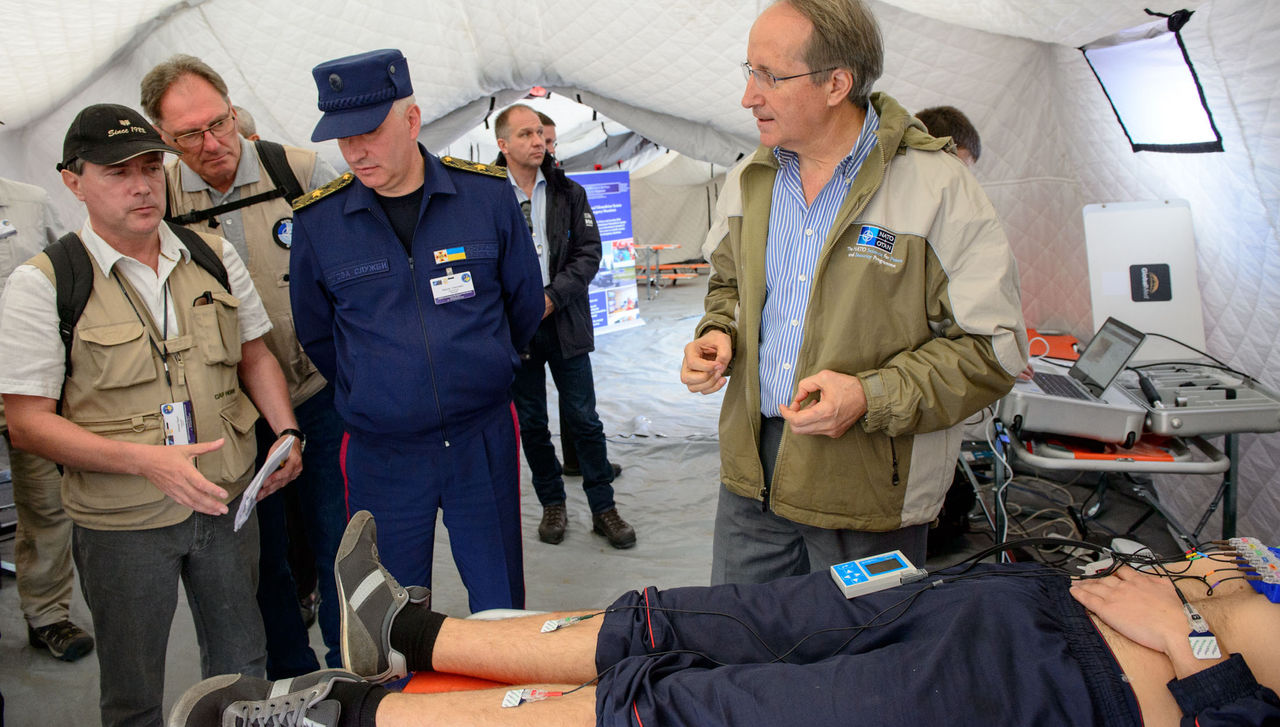
NATO has developed a multinational telemedicine system, enabling medical specialists to provide real-time recommendations to first responders at emergency scenes or in combat zones. On Friday (24 February 2017), a high-level conference at NATO headquarters marked the completion of this project, supported by the NATO Science for Peace and Security Programme.
The telemedicine system can be used both by the military and civilian paramedics. “In the event of a disaster, telemedicine helps eliminate distance barriers and improves access to medical services that would often not be available on the ground, even in remote areas,” explained Ambassador Sorin Ducaru, NATO Assistant Secretary General for Emerging Security Challenges.
Thanks to telemedicine, medical specialists, located in different parts of the world, are able to assess patients, diagnose them and provide real-time recommendations. Portable medical kits allow first responders at the scene to connect to the system, receiving expert advice from medical specialists. This allows the right aid and care to reach those who need it most quickly, with the potential to save many lives in disasters.
Launched in 2013, the project was led by scientists and experts from NATO Allies Romania and the United States and partner countries Finland, Moldova and Ukraine. Allies and partners provided advanced equipment, such as kits for connectivity and solar panels, as well as training for experts. NATO’s Communications and Information Agency (NCIA) provided expertise on communications technologies.