
Close
Back


From now on you can download videos from our website
If you would also like to subscribe to the newsletter and receive our latest updates, click on the button below.
Enter the email address you registered with and we will send you a code to reset your password.
The password must be at least 12 characters long, no spaces, include upper/lowercase letters, numbers and symbols.
Click the button to return to the page you were on and log in with your new password.
23 November 2016
1 MIN READ
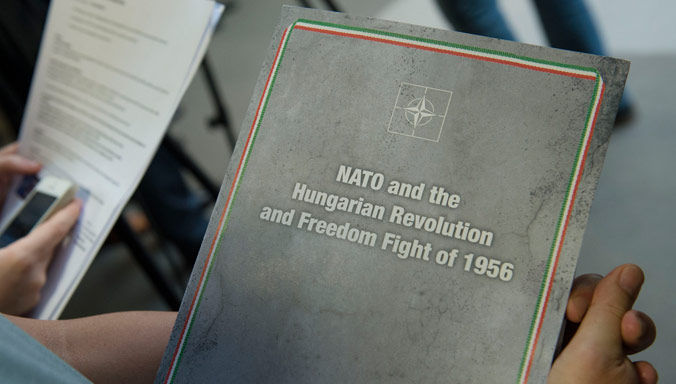
At the request of the Hungarian Delegation to NATO, the NATO Archives published a softbound collection of publicly disclosed NATO documents to help support the commemoration ceremony for the Hungarian Revolution of 1956 held today at NATO HQ. The publication, titled “NATO and the Hungarian Revolution and Freedom Fight of 1956”, showcases documents dating from 1956-1959 to present the story of NATO’s reactions and responses to the dramatic events that were unfolding in Hungary.
Organized in chronological order, the publicly disclosed NATO documents provide a glimpse of the intelligence sharing about the crisis in Hungary that was taking place within the North Atlantic Council during their private meetings in late 1956. While these private meetings served as a forum for multiple expressions of grave concern, they also reveal the quick decision by the Council to mobilize a humanitarian response to the mass exodus of Hungarian students fleeing the repercussions of the Revolution. Reports presented at meetings of the Political Committee (AC/119) and the Committee on Information and Cultural Relations (AC/52) reveal the many different ways that NATO countries provided aid and support to Hungarians seeking refuge across Western Europe. This collection of publicly disclosed NATO documents provided the implicit historical context for the keynote speech delivered by Secretary General Jens Stoltenberg, who paid tribute to the plight of these Hungarian refugees with some personal recollections of the uprising and its aftermath as they were relayed to him by his father Thorvald Stoltenberg, who was also present at the ceremony.
The digital version of the “NATO and the Hungarian Revolution and Freedom Fight of 1956” is available in the PDF library located on the right sidebar. Additional publicly disclosed NATO documents related to the 1956 Hungarian Revolution are available for consultation at NATO Archives Online.