
Close
Back


From now on you can download videos from our website
If you would also like to subscribe to the newsletter and receive our latest updates, click on the button below.
Enter the email address you registered with and we will send you a code to reset your password.
The password must be at least 12 characters long, no spaces, include upper/lowercase letters, numbers and symbols.
Click the button to return to the page you were on and log in with your new password.
15 November 2016
2 MIN READ
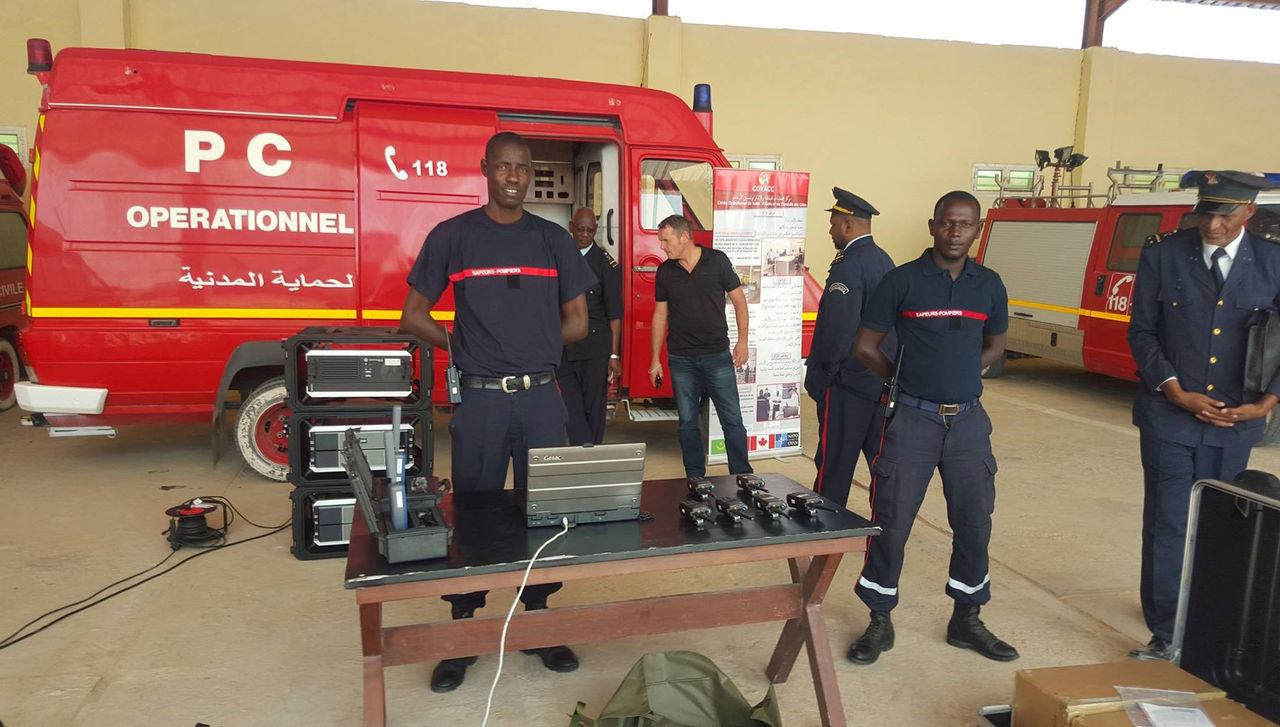
Mauritania is facing growing threats from terrorism and is affected by droughts and other climate change disasters. A national crisis management centre, supported by NATO’s Science for Peace and Security (SPS) Programme, has been inaugurated in Nouakchott to help authorities quickly respond to crises and coordinate an appropriate response.
“The arrangements put in place will strengthen, without any doubt, the operational capacity for civil protection and provide effective responses to various crises,” said Ahmedou Ould Abdella, Minister of Interior and Decentralisation of Mauritania at the inauguration ceremony on 8 November 2016. He added that the centre will also improve civil protection, early warning of the population against threats and risks, and enhance preparedness against crises affecting national security.
The centre is financed by a NATO Science for Peace and Security (SPS) project and is based on a system which provides modern communication equipment for crisis monitoring, alert and management.
Four regional operational coordination centres across the country have also been created with portable kits for mobile crisis coordination. This comprehensive system has been referred to as an example for the entire Sahel region.
Mr Julien Marion, Deputy Director General of the French Directorate General for Civil Security and Crisis Management (DGSCGC) emphasised the benefit of the new crisis management centre for the local populations, including both in urban areas and remote regions of Mauritania.
On a national level, the new system ensures optimal operational watch and early warning. It also supports emergency response by compiling and analysing information from various sources, using modern technology and simulations.
Regionally, it facilitates situational awareness in the different provinces of Mauritania. The centres are receiving and processing emergency calls, track incidents, and sharing the information gathered with the national level and other regions that may be affected by a particular event.
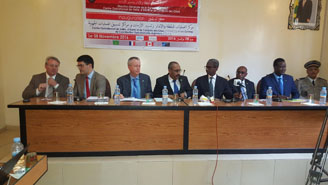
“The implementation of this system will allow to cover all regions, ensure consistency in crisis prevention and risk management, and help to connect very remote areas of the country, and thus ensuring the same level of protection and safety for the whole population,” said US Ambassador Larry André from the NATO Contact Point Embassy in Nouakchott. He congratulated the project directors from Mauritania and France on the successful implementation of the project.
The inauguration ceremony was also attended by the Ministers of National Defence, Health, and Environment and Sustainable Development of Mauritania. The Director General for the Protection of Civilians and France’s Ambassador to Mauritania also participated in the event.
The crisis management centre financed in the framework of the NATO SPS Programme also received substantial national contributions from France and Canada.