
Close
Back


From now on you can download videos from our website
If you would also like to subscribe to the newsletter and receive our latest updates, click on the button below.
Enter the email address you registered with and we will send you a code to reset your password.
The password must be at least 12 characters long, no spaces, include upper/lowercase letters, numbers and symbols.
Click the button to return to the page you were on and log in with your new password.
27 June 2016
1 MIN READ
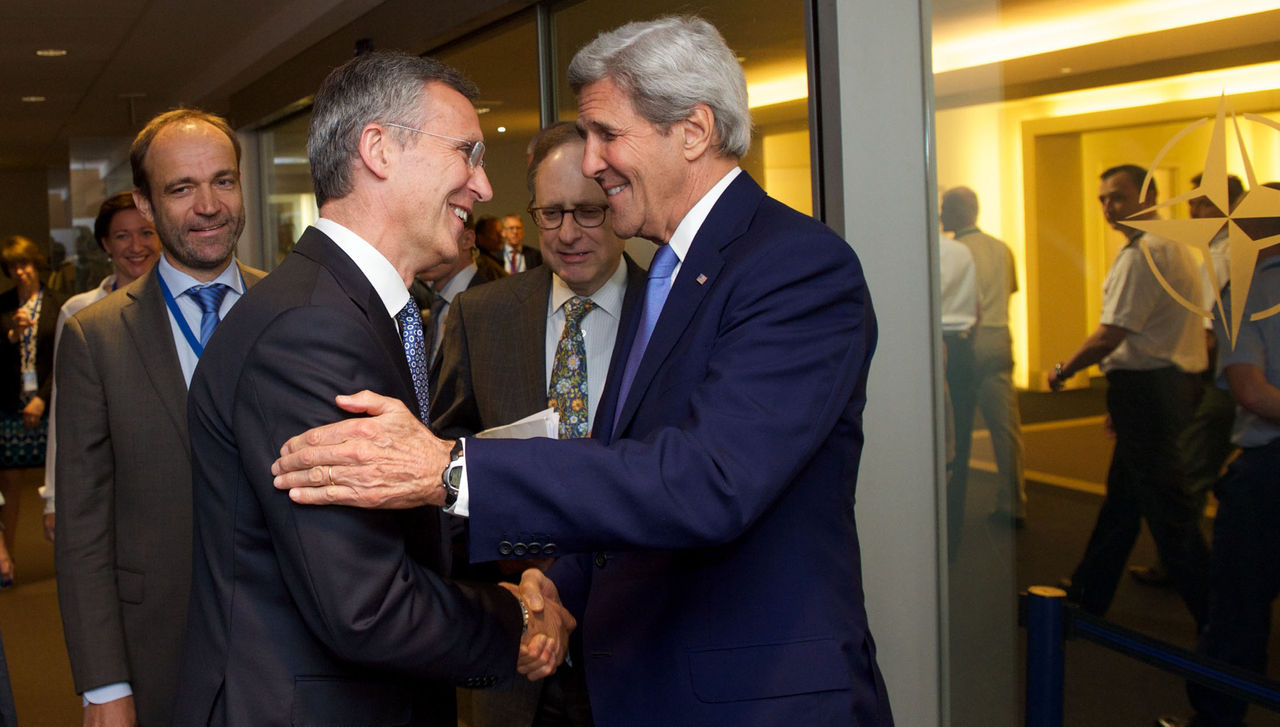
Secretary General Jens Stoltenberg held talks with US Secretary of State John Kerry at NATO headquarters on Monday (27 June 2016) on next week’s Warsaw Summit, and the implications of the UK’s vote on membership in the European Union.
They welcomed the British government’s restatement of its steadfast commitment to the Alliance. They agreed that the EU remains a vital pillar for security cooperation in Europe. Secretary General said that “NATO has become even more important as a platform for cooperation between Europe and North America, but also defence and security cooperation between European NATO Allies. Cooperation between NATO and the EU has always been important, but it’s even more important now after the decision of the United Kingdom.”
At the landmark Warsaw Summit on 8 and 9 July, NATO leaders will take important decisions to enhance collective defence and deterrence, including an enhanced military presence in the east of the Alliance. They will also step up efforts to project stability beyond NATO’s borders, working hand-in-hand with partners to the south and to the east. Leaders will also take practical cooperation with the European Union to the next level in areas including maritime security and countering hybrid threats.