
Close
Back


From now on you can download videos from our website
If you would also like to subscribe to the newsletter and receive our latest updates, click on the button below.
Enter the email address you registered with and we will send you a code to reset your password.
The password must be at least 12 characters long, no spaces, include upper/lowercase letters, numbers and symbols.
Click the button to return to the page you were on and log in with your new password.
15 June 2016
1 MIN READ
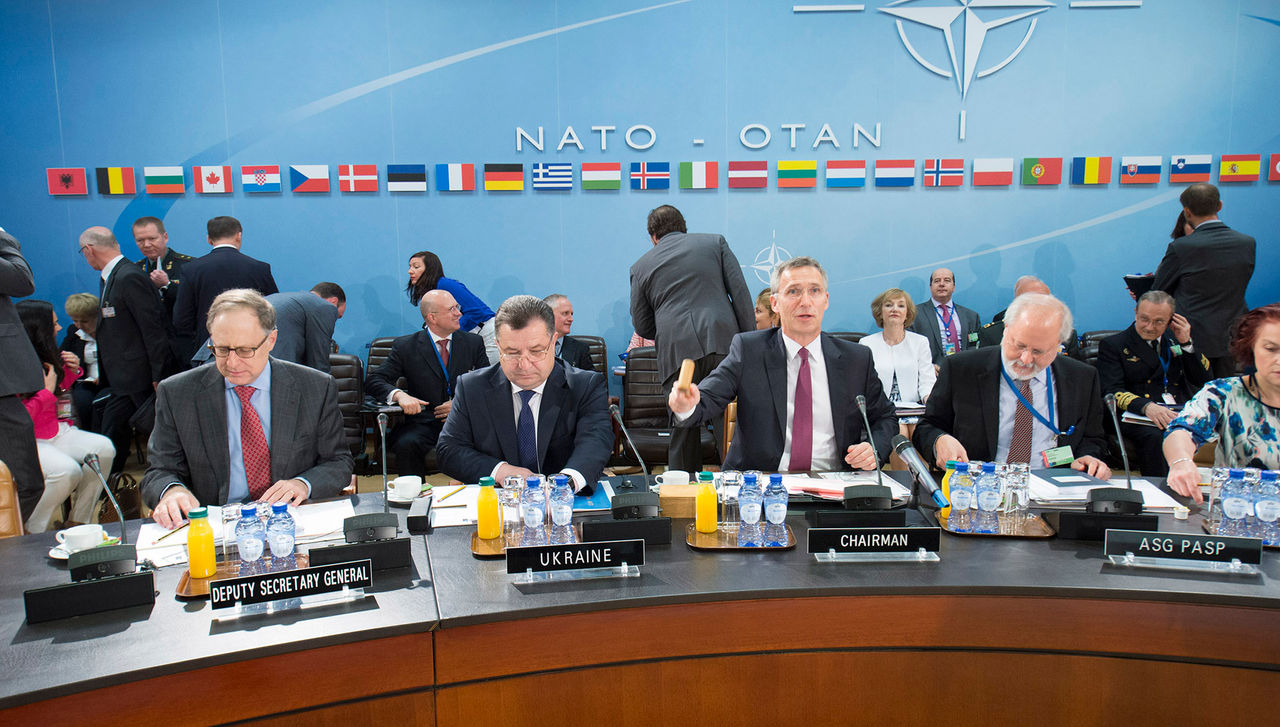
Defence Ministers agreed on Wednesday (15 June 2016) to boost NATO’s support for Ukraine with a Comprehensive Package of Assistance. The Package aims to help Ukraine strengthen its defences by building stronger security structures. In a meeting of the NATO-Ukraine Commission, Allied ministers also exchanged views with Ukrainian Defence Minister Stepan Poltorak on the current security situation in eastern Ukraine, and the progress of government reforms.
Secretary General Jens Stoltenberg explained that the Comprehensive Package brings together all the strands of NATO’s support, and will “help Ukraine establish more effective and efficient defence and security structures, and to strengthen civilian control over them.” He highlighted that the Alliance is already implementing projects under the Trust Funds established for Ukraine, including on command and control, cyber defence, and rehabilitating wounded soldiers. “We are also developing new projects, including in the areas of countering hybrid warfare and explosive devices,” he said.
“The situation in eastern Ukraine, caused by Russia’s actions, remains of concern,” the Secretary General said, pointing to daily ceasefire violations and impediments to the work of OSCE observers. Ministers agreed that the Minsk Agreements remain the path to a sustainable solution to the conflict, and urged all parties to fully implement them. They also expressed NATO’s enduring support for Ukraine’s sovereignty and territorial integrity, reiterating that Allies do not and will not recognise the illegal and illegitimate annexation of Crimea. “Russia needs to stop supporting the militants, and withdraw its forces and military equipment from Ukrainian territory,” said Mr. Stoltenberg.
During the meeting, Minister Poltorak presented Ukraine’s defence reform roadmap, the Strategic Defence Bulletin. “Modernising Ukraine’s forces while they are engaged in conflict is no easy task, but the government is making good progress,” said the Secretary General.
Allies will meet with President Poroshenko in the NATO-Ukraine Commission at the Warsaw Summit in July.