Close
Back


From now on you can download videos from our website
If you would also like to subscribe to the newsletter and receive our latest updates, click on the button below.
Enter the email address you registered with and we will send you a code to reset your password.
The password must be at least 12 characters long, no spaces, include upper/lowercase letters, numbers and symbols.
Click the button to return to the page you were on and log in with your new password.
25 May 2016
1 MIN READ
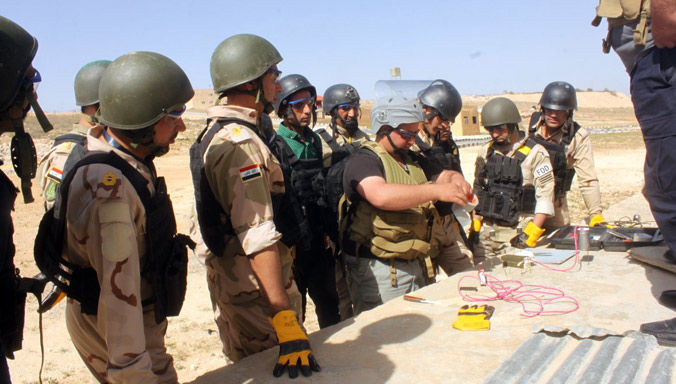
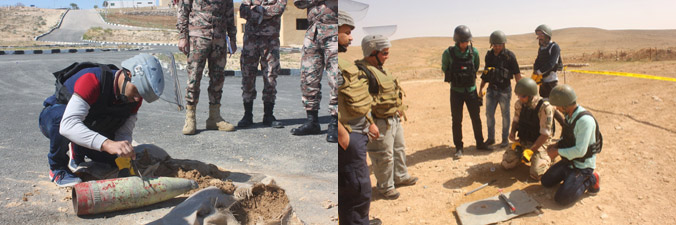
NATO is helping Iraqi officers learn how to find and defuse Improvised Explosive Devices (IED). Between 1 May and 6 June 2016, two dozen officers are undertaking courses at the King Abdullah II Special Operations Training Centre in Amman, Jordan. NATO is also providing “train the trainer” instruction, enabling the officers to build the professionalism of the Iraqi forces by sharing their new skills with colleagues with the support of the NATO Counter Improvised Explosive Devices Centre of Excellence.
The project which includes technical training and the provision of search equipment was developed and initiated by NATO’s Science for Peace and Security Programme and implemented by the NATO Support and Procurement Agency. Iraq’s counter-IED operations will support humanitarian efforts to return displaced populations safely to their homes.
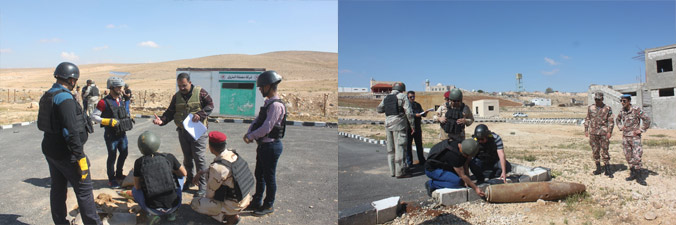
The Alliance began training Iraqi officers in Jordan in April 2016, and over the coming months, approximately 350 will be trained in areas including military medicine, civil military planning and countering improvised explosive devices. At the request of the Iraqi government, NATO is now assessing the possibility of conducting training inside Iraq as well.
Building the defence capacities of partners is an important way in which NATO projects stability beyond its borders.