
Close
Back


From now on you can download videos from our website
If you would also like to subscribe to the newsletter and receive our latest updates, click on the button below.
Enter the email address you registered with and we will send you a code to reset your password.
The password must be at least 12 characters long, no spaces, include upper/lowercase letters, numbers and symbols.
Click the button to return to the page you were on and log in with your new password.
12 May 2016
1 MIN READ
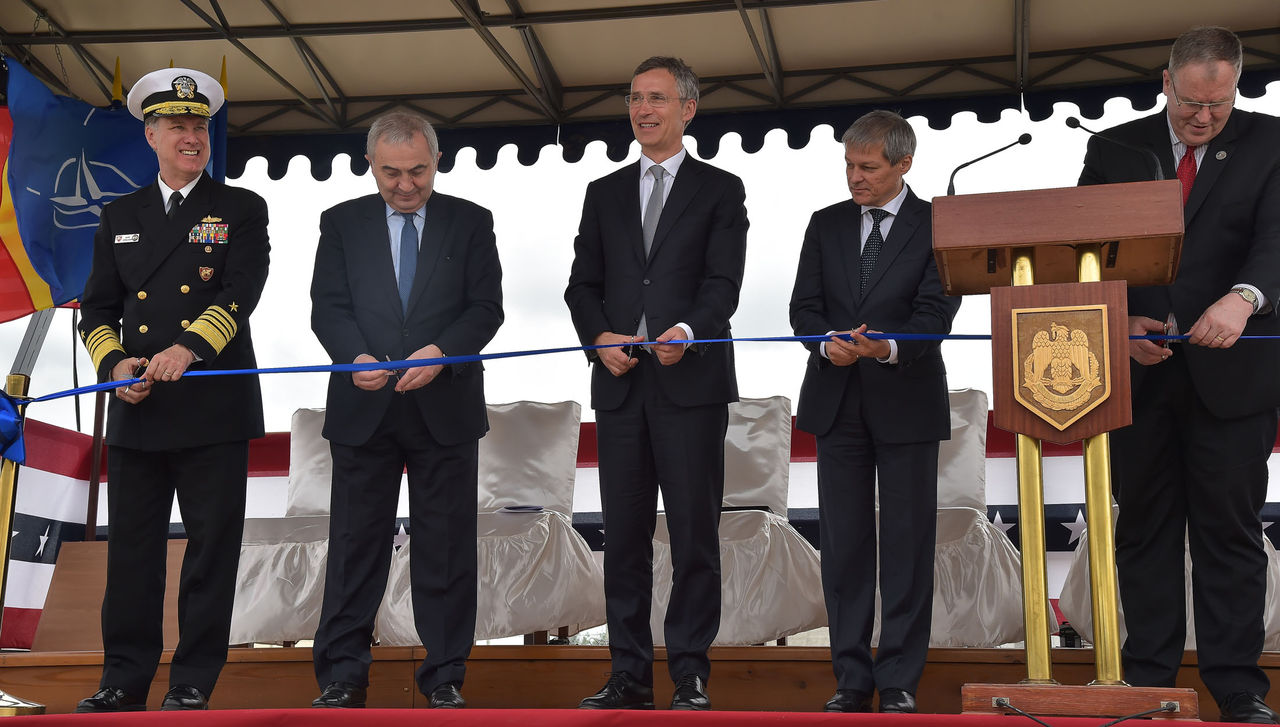
A United States missile defence system aimed at protecting European NATO Allies from ballistic missiles threats was declared operational at a ceremony in Deveselu, Romania on Thursday (12 May 2016).
“Today represents an important moment for NATO and transatlantic security,” NATO Secretary General Jens Stoltenberg said, speaking alongside Romanian Prime Minister Dacian Ciolos and U.S. Deputy Secretary of Defence Robert Work. Mr. Stoltenberg underlined that the activation of the site “represents a significant increase in the capability to defend European Allies against the proliferation of ballistic missiles from outside the Euro-Atlantic area”.
The first-of-its-kind land-based missile defence installation is designed to detect, track, engage, and destroy ballistic missiles in flight outside the atmosphere. Dubbed “Aegis Ashore”, the base uses technology which is almost identical to that used on U.S. Navy Aegis ships.
“The threat to NATO Allies from missiles outside the Euro-Atlantic area is real,” the Secretary General said. “Several countries are seeking to develop or acquire them. Our missile defence programme represents a long-term investment against this long-term threat.” He added that NATO ballistic defence was purely defensive and not directed against Russia.
The site in Deveselu is part of a larger effort to protect European Allies against ballistic missiles. Other components includes a radar facility in Turkey, four U.S. guided-missile destroyers in Spain and a headquarters in Ramstein, Germany. Denmark and the Netherlands are upgrading their frigates with radar capabilities. The United States will also start construction of a second land-based interceptor site in Poland on Friday (13 May) that is due to come online by 2018.
Earlier on Thursday, Secretary General Stoltenberg met with Romanian President Klaus Iohannis for talks on the the security situation in the region and preparations for the NATO Warsaw Summit inJuly. Mr Stoltenberg also visited NATO’s Multinational Headquarters South-East in Bucharest together with Romanian Defence Minister Mihnea Motoc and Foreign Minister Lazar Comansecu.