
Close
Back


From now on you can download videos from our website
If you would also like to subscribe to the newsletter and receive our latest updates, click on the button below.
Enter the email address you registered with and we will send you a code to reset your password.
The password must be at least 12 characters long, no spaces, include upper/lowercase letters, numbers and symbols.
Click the button to return to the page you were on and log in with your new password.
22 April 2016
1 MIN READ
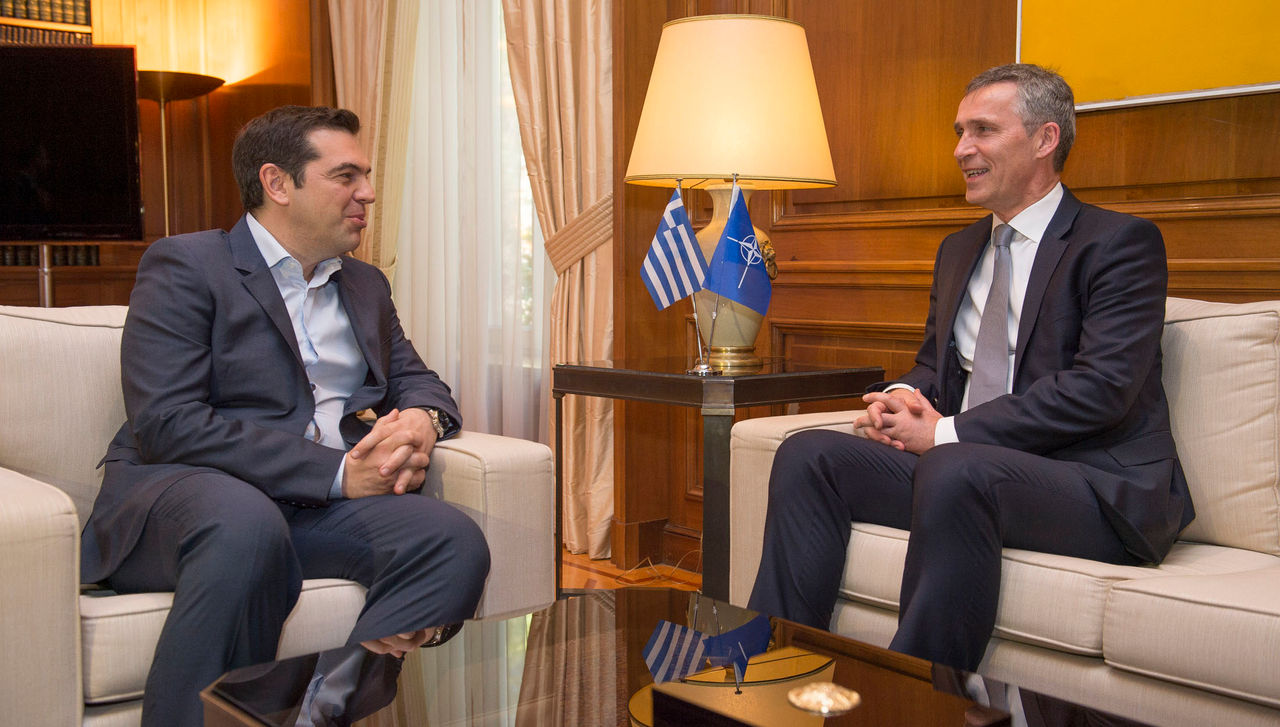
Visiting Athens on Friday (22 April), NATO Secretary General Jens Stoltenberg met with the Greek President Prokopios Pavlopoulos, Prime Minister Aleksis Tsipras and Defence Minister Panos Kammenos to discuss current security challenges and NATO’s response.
Mr. Stoltenberg thanked Greece for its commitment to the Alliance for many decades, its investment in collective defence, and its significant efforts to cope with the biggest migrant and refugee crisis in Europe since World War Two.
The Secretary General recalled that "NATO is in the Aegean Sea because Greece, Germany and Turkey requested our assistance to help cut the lines of human trafficking," and stressed that, as part of international efforts, "NATO is helping counter criminal networks, secure our borders and save lives. NATO is also working with the EU closer than ever before." Mr. Stoltenberg thanked Greece for contributing three ships to NATO's deployment in the Aegean, and for the excellent cooperation with Turkey and the EU's border agency Frontex.
In preparation for the NATO Summit in Warsaw in July, the Secretary General also discussed with his Greek hosts NATO's efforts to address the root causes of the refugee and migrant crisis. “We are assisting partner countries in the Middle East and North Africa to strengthen their own defence and fight terrorism and instability”, he said. The Secretary General stressed that this month NATO started training Iraqi officers and stands ready to support Libya.
“We also discussed the challenge of a more assertive Russia, responsible for aggressive actions in Ukraine”, Mr. Stoltenberg said. He stressed that in response to Russia’s actions the Alliance has increased collective defence and deterrence, "not to provoke a conflict, but to prevent a conflict, and to keep our citizens safe." At the same time, NATO is keeping lines of political dialogue open, as testified by the recent meeting of the NATO-Russia Council.