
Close
Back


From now on you can download videos from our website
If you would also like to subscribe to the newsletter and receive our latest updates, click on the button below.
Enter the email address you registered with and we will send you a code to reset your password.
The password must be at least 12 characters long, no spaces, include upper/lowercase letters, numbers and symbols.
Click the button to return to the page you were on and log in with your new password.
18 March 2016
1 MIN READ
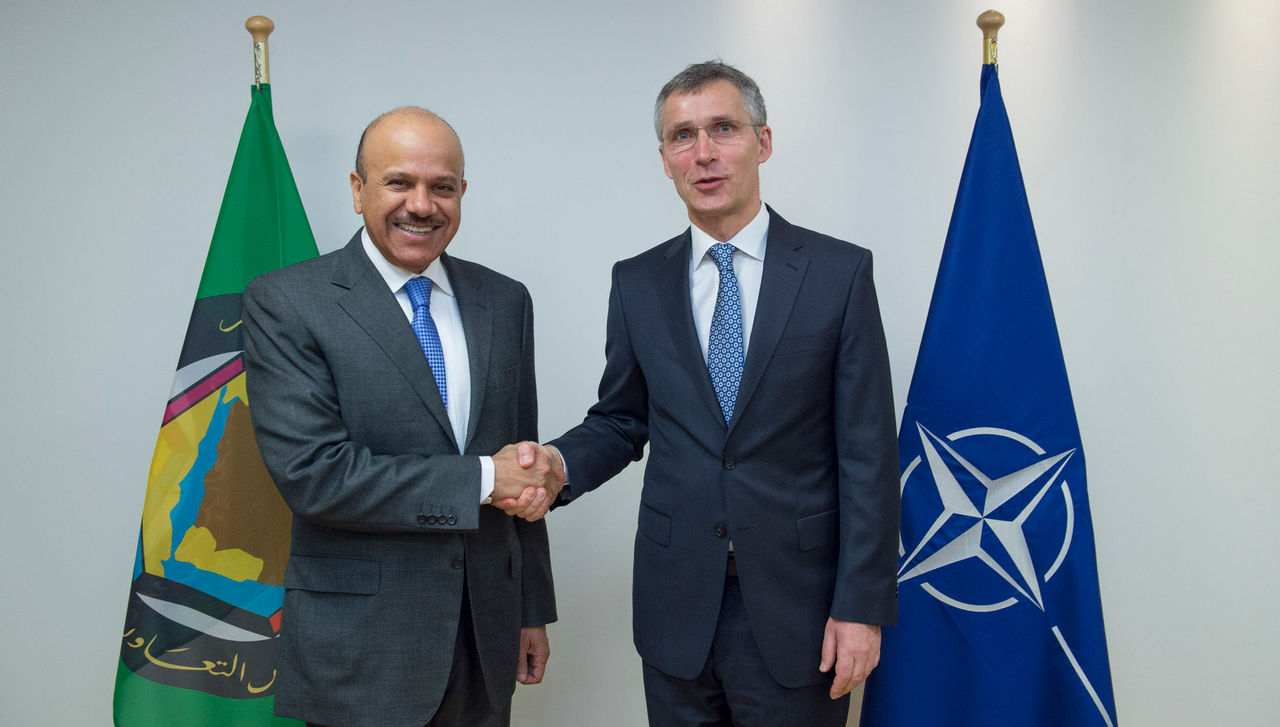
NATO Secretary General Jens Stoltenberg welcomed the Secretary General of the Gulf Cooperation Council, Abdul Latif Bin Rashid Al Zayani, to NATO headquarters on Friday (18 March 2016) for talks on deepening cooperation between the two organisations.
At a special session of the North Atlantic Council, Mr. Stoltenberg welcomed the Gulf Cooperation Council’s important role in contributing to regional stability, and thanked Dr. Al Zayani for his personal engagement with the Alliance. The Secretaries General and Allied ambassadors exchanged views on the regional security situation, and discussed reinforcing ties between NATO and the Gulf Cooperation Council with more regular staff contacts and political dialogue as a first step.
NATO places high importance on building cooperation with Gulf States. The Alliance has already developed political dialogue and practical cooperation with four out of six Gulf Cooperation Council members (Bahrain, Kuwait, Qatar, and the United Arab Emirates) through the Alliance’s Istanbul Cooperation Initiative, which was launched in 2004.