
Close
Back


From now on you can download videos from our website
If you would also like to subscribe to the newsletter and receive our latest updates, click on the button below.
Enter the email address you registered with and we will send you a code to reset your password.
The password must be at least 12 characters long, no spaces, include upper/lowercase letters, numbers and symbols.
Click the button to return to the page you were on and log in with your new password.
08 March 2016
1 MIN READ
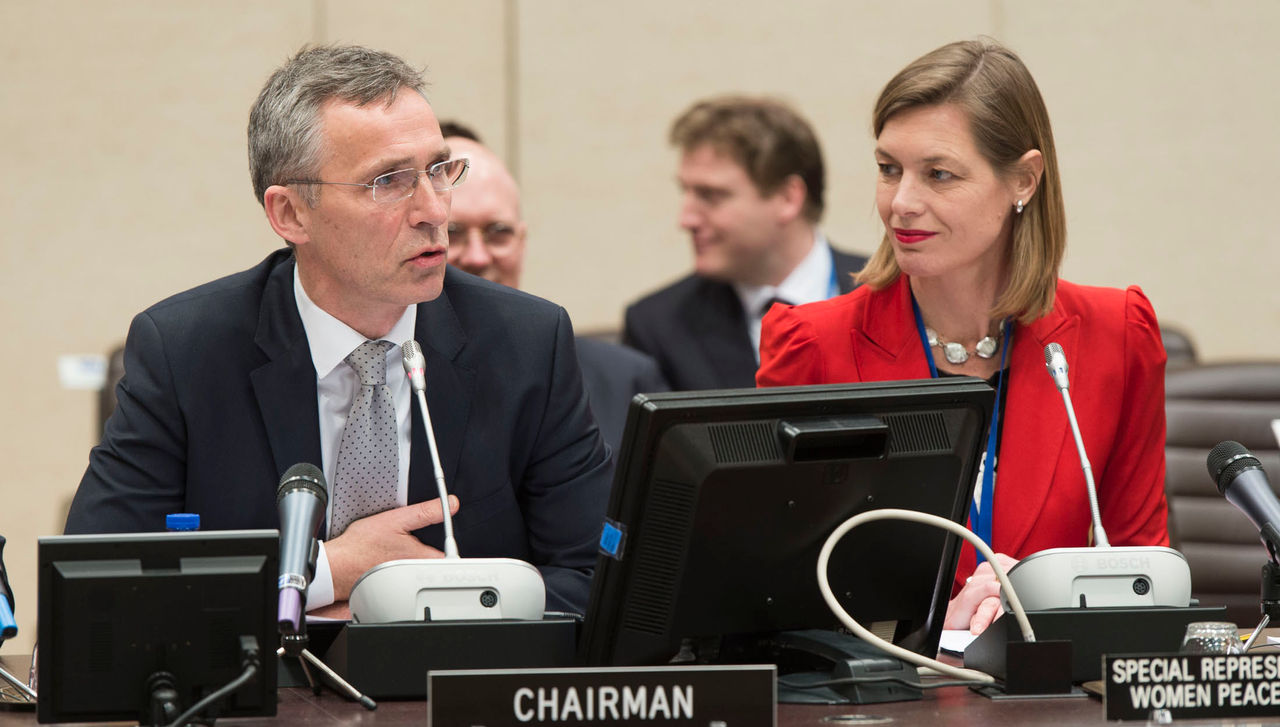
On International Women’s Day, NATO Secretary General Jens Stoltenberg welcomed Allies and partner countries to a “Barbershop Conference” on gender equality at NATO Headquarters on Tuesday (8 March 2016). Hosted by Iceland and Canada, and facilitated by Ambassador Marriët Schuurman, NATO’s Special Representative for Women, Peace and Security, the Conference aims to dispel gender stereotypes and encourage participants to talk freely – as in a barbershop – about working towards gender equality.
The Secretary General stressed that “gender equality isn’t optional, it’s fundamental,” and outlined three reasons why gender equality is an important issue at NATO and in all militaries. Firstly, he highlighted that NATO is a values-based organization and none of the Alliance’s fundamental values – individual liberties, democracy, human rights and the rule of law – work without equality.Secondly, he noted that it is more dangerous to be a woman than a soldier in conflict zones, which inspired the initial adoption of the “No Women, No Peace” United Nations Security Council Resolution. “If peace is to be sustainable, you cannot ignore half the population”, said the Secretary General.
Thirdly, Mr. Stoltenberg underlined that diversity yields strength, effectiveness, and allows NATO to recruit the best and the brightest. “We learned in Afghanistan and in the Balkans that by integrating gender within our operations, we make a tangible difference to the lives of women and children,” said the Secretary General. He stressed that NATO is proud of its record in embedding gender perspectives within its practical work: from planning and executing operations and missions, to implementing new guidelines on eliminating gender-based violence.
The Secretary General also highlighted that gender is a key principle of NATO’s Defence Capacity Building Initiative, and that Allies are now working with Jordan on gender training for their armed forces. While the Alliance is a trendsetter in this respect, the Secretary General emphasised that NATO needs to do more, particularly when it comes to increasing the number of women in senior leadership positions at NATO. Reviewing the importance of gender equality, Mr. Stoltenberg stressed that “this conversation should not be limited to special occasions. We should have it every day, and act on it every day.”