
Close
Back


From now on you can download videos from our website
If you would also like to subscribe to the newsletter and receive our latest updates, click on the button below.
Enter the email address you registered with and we will send you a code to reset your password.
The password must be at least 12 characters long, no spaces, include upper/lowercase letters, numbers and symbols.
Click the button to return to the page you were on and log in with your new password.
16 February 2016
1 MIN READ
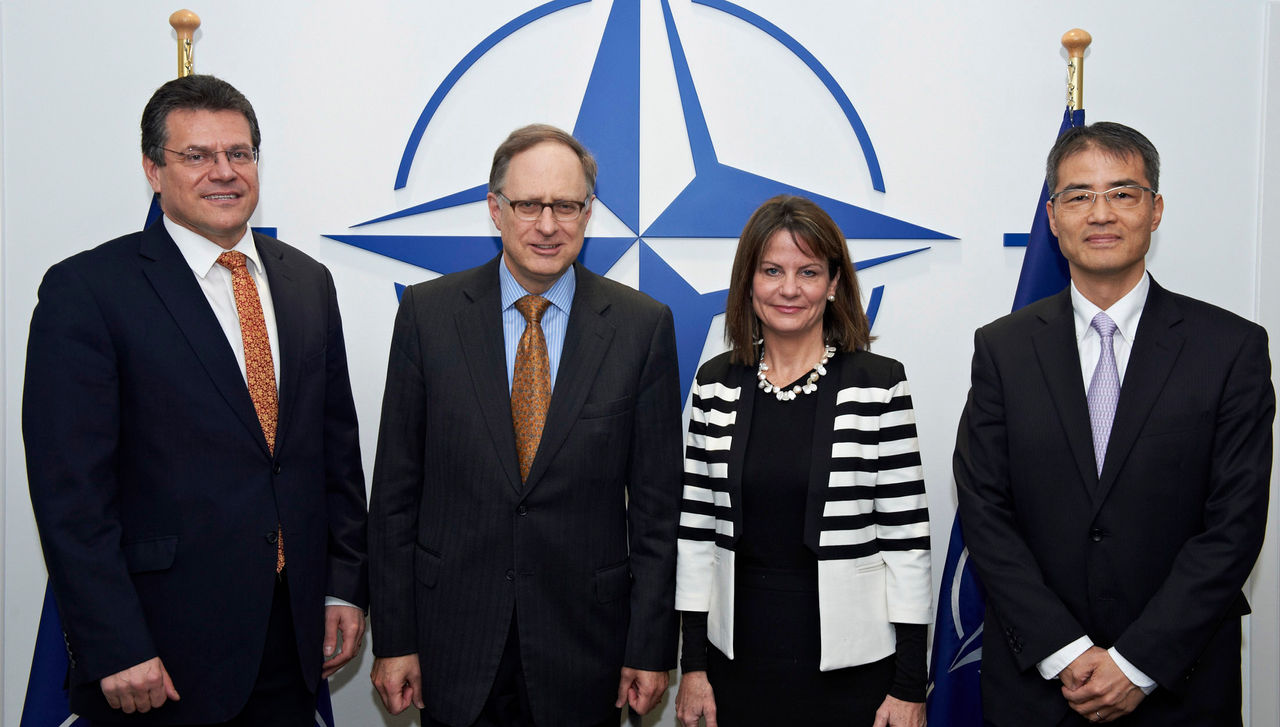
In a meeting with external experts, the North Atlantic Council today (16 February 2016) discussed global energy developments and their security implications. EU Commission Vice President, Ambassador Maroš Šefčovič, US State Department Deputy Assistant Secretary for Energy Diplomacy, Robin Dunnigan, and the International Energy Agency’s Director for Energy Markets and Security, Keisuke Sadamori outlined the strategic implications of the low oil price environment, reviewed the current state of energy security in Europe, and examined the Coalition’s efforts to disrupt the illegal energy sales of the so-called Islamic State.
The meeting was part of a periodic series of consultations that enable NATO to keep abreast of energy developments that could affect Allies’ security, as well as to tap into the expertise of other institutions, such as the EU and the IEA.