NATO MULTIMEDIA ACCOUNT

Access NATO’s broadcast-quality video content free of charge

Register

Create an account

Create an account

Check your inbox and enter verification code

We have sent a verification code to your email address. . Enter the code to verify your account. This code will expire in 30 minutes.
Verification code

Didn't receive a code? Send new Code

You have successfully created your account

From now on you can download videos from our website

Subscribe to our newsletter

If you would also like to subscribe to the newsletter and receive our latest updates, click on the button below.

Reset password

Enter the email address you registered with and we will send you a code to reset your password.

Reset password
Check your inbox and enter verification code
We have sent a verification code to your email address. Enter the code to verify your account. This code will expire in 30 minutes.
Verification code

Didn't receive a code? Send new Code

Create a new password

The password must be at least 12 characters long, no spaces, include upper/lowercase letters, numbers and symbols.

Your password has been updated

Click the button to return to the page you were on and log in with your new password.

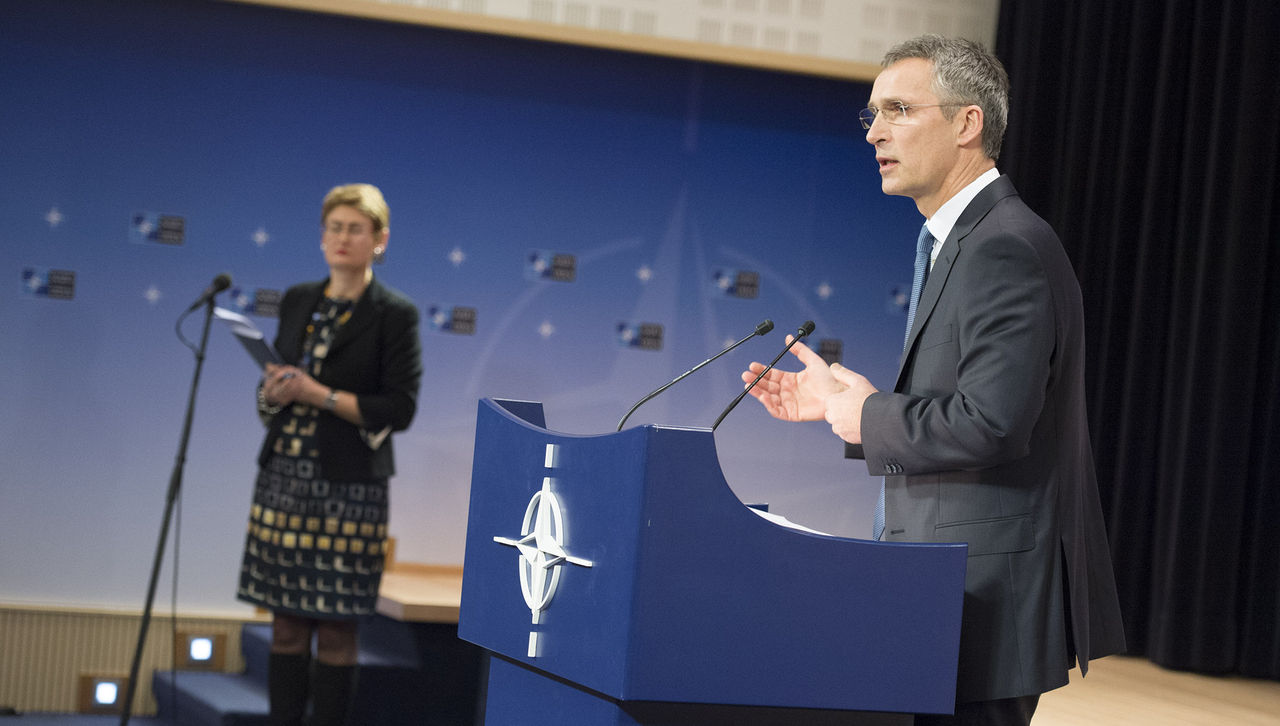
NATO Defence Ministers agreed that NATO will provide support to assist with the refugee and migrant crisis on Thursday (11 February 2016). “The goal is to participate in the international efforts to stem the illegal trafficking and illegal migration in the Aegean,” Secretary General Jens Stoltenberg said.

NATO’s Standing Maritime Group 2 is currently deployed in the region and will be tasked to conduct reconnaissance, monitoring and surveillance of illegal crossings in the Aegean. It will also establish a direct link with the European Union’s border management agency, Frontex.

The Secretary General stressed that this mission is “not about stopping or pushing back refugee boats,” but about contributing “critical information and surveillance to help counter human trafficking and criminal networks.” As part of the agreement, NATO will cooperate closely with national coastguards and the European Union. Military authorities are now working out the details of the mission.

Ministers also agreed to step up NATO support for the international coalition to counter ISIL. “We agreed in principle to use NATO AWACS surveillance planes to backfill national AWACS capabilities,” said Mr. Stoltenberg. He noted that this decision will increase the coalition’s ability to “degrade and destroy the terrorist group ISIL, which is our common enemy.”

To improve NATO’s ability to respond quickly to hybrid threats, Defence Ministers agreed a detailed implementation plan on the Alliance’s hybrid strategy. Ministers also took steps to increase Allies’ resilience in areas that are vital in any crisis, such as food and water resources, telecommunications and cyber networks, and transportation. “Resilience is primarily a national responsibility. But both NATO and the European Union have a role in providing tools and advice in specific areas,” said the Secretary General.

Ministers also discussed the situation in Afghanistan. They assessed the work of the Alliance-led Resolute Support Mission to train, advice and assist Afghan security forces. Ministers agreed to keep the mission under review, in order to ensure its effectiveness.