
Close
Back


From now on you can download videos from our website
If you would also like to subscribe to the newsletter and receive our latest updates, click on the button below.
Enter the email address you registered with and we will send you a code to reset your password.
The password must be at least 12 characters long, no spaces, include upper/lowercase letters, numbers and symbols.
Click the button to return to the page you were on and log in with your new password.
06 February 2015
1 MIN READ
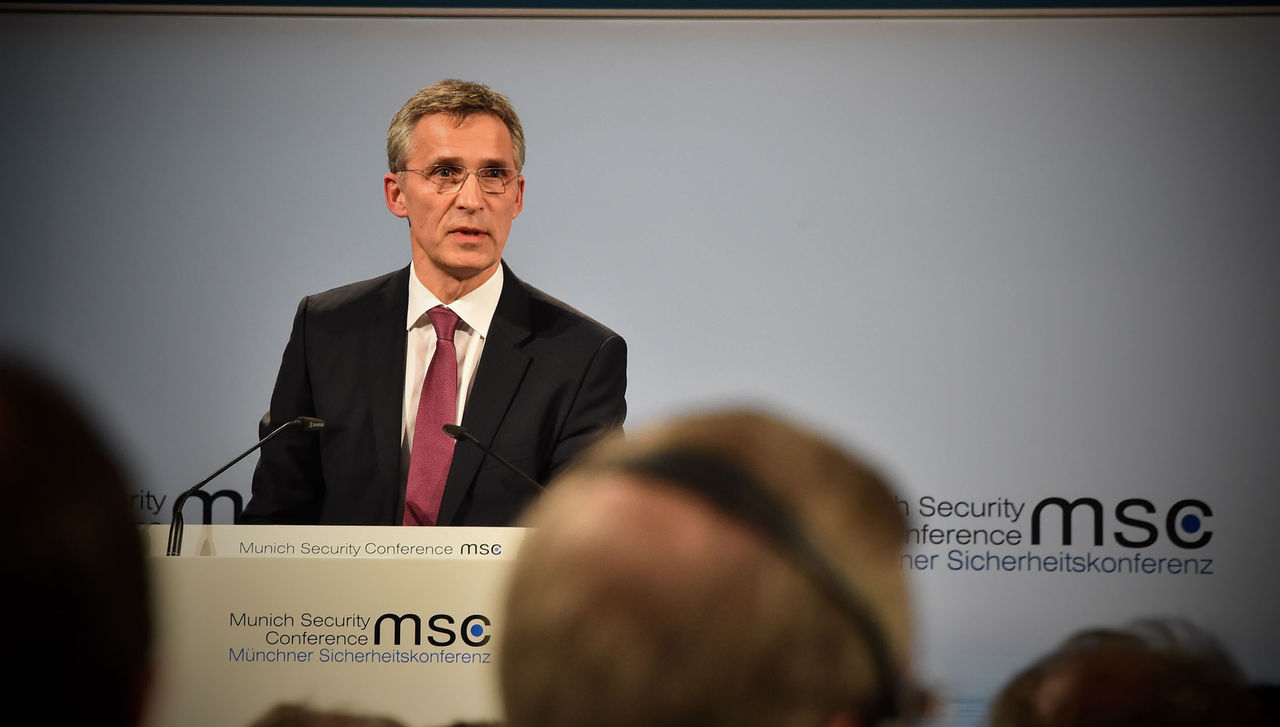
The NATO Secretary General, Jens Stoltenberg, said the efforts by Chancellor Merkel and President Hollande to find a peaceful solution to the Ukraine crisis are ‘important and urgent’. Mr Stoltenberg opened the Munich Security Conference on Friday (6 February 2015) with a keynote speech together with German Defence Minister Ursula von der Leyen and Ambassador Wolfgang Ischinger. The Secretary General said there was no contradiction between defence and dialogue: “A strong NATO is essential if we are to engage Russia with confidence. A constructive NATO-Russia relationship would benefit the Euro-Atlantic community. And the entire international order. But international rules must be respected – not rewritten. And certainly not violated.”
On the margins of the conference the Secretary General held a range of bilateral meetings.
On Friday, the Secretary General discussed current security challenges with the President of Slovenia Borut Pahor and the German Defence Minister Ursula von der Leyen. He also discussed developing NATO's partnerships with the President of the Republic of Finland Sauli Niinistö and wIth the Prime Minister of Serbia Aleksandar Vučić.
On Saturday (February 7) he met with the US Vice-President Joe Biden to discuss the ongoing work to adapt NATO's posture to current security challenges, the Ukraine-Russia crisis and the NATO-led mission in Afghanistan. He also held talks with US Senator John McCain and a group of Congressmen and women. He thanked the Secretary of Defence Michael Fallon for the UK's contributions to implementing the decisions taken at the Wales Summit to keep NATO forces ready and robust.
The Secretary General expressed strong support for a sovereign Ukraine in a meeting with President Petro Poroshenko. He restated NATO's clear position on Russia's actions in Ukraine in a meeting with Foreign Minister Sergei Lavrov.
The Secretary General met with President Ashraf Ghani to review the current security situation in Afghanistan. He also discussed ongoing reforms in Montenegro in a meeting with Prime Minister Milo Đukanović.