
Close
Back


From now on you can download videos from our website
If you would also like to subscribe to the newsletter and receive our latest updates, click on the button below.
Enter the email address you registered with and we will send you a code to reset your password.
The password must be at least 12 characters long, no spaces, include upper/lowercase letters, numbers and symbols.
Click the button to return to the page you were on and log in with your new password.
30 June 2014
1 MIN READ
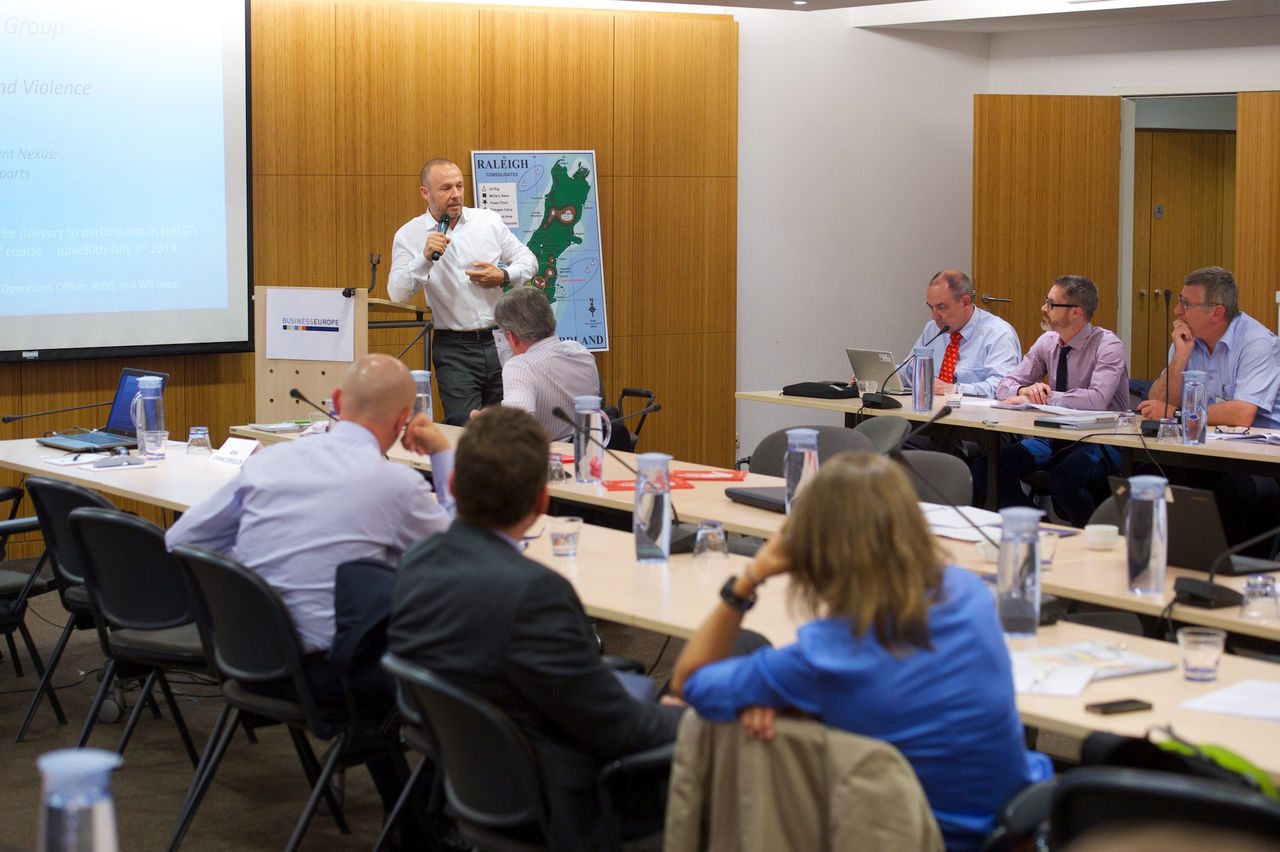
Working with representatives from a widening circle of international organisations is a boost for NATO’s efforts to help reinforce a comprehensive approach to crises. Involving political, civilian and military instruments, this type of approach capitalises on the complementarity of the different participating actors. As such, it is a logical target to set when faced with complex crises that have potentially long-term consequences.
Over the past three years, NATO has been cooperating more closely with international organisations and non-governmental organisations (NGOs) alike to create enduring links and share experiences in crisis situations. NATO is particularly interested in improving its ability to contribute to stabilisation and reconstruction efforts once conflicts have been resolved. NATO’s Comprehensive Approach Action Plan is designed for the Alliance to work more closely with partner organisations in crisis prevention, management, as well as capacity-building.
This summer, NATO organised the second edition of a comprehensive approach awareness course that lasted four days, from 30 June to 3 July 2014 (a similar course had been organised a year earlier, following a pilot course launched in 2011). The 2014 course programme included a practical exercise during which participants were invited to provide recommendations on the response to a complex crisis scenario. This was followed by a series of briefings and discussions that helped to exchange experiences, build relations and find concrete ways of moving the comprehensive approach to crises forward. The establishment of useful networks among international organisations and the development of a more structured dialogue with the NGO community will be instrumental in addressing future real-life crisis situations.
In addition to the regular attendees invited by NATO (the United Nations, the European Union, the Organization for Security and Co-operation in Europe, the World Bank, the International Organization for Migration and the International Committee of the Red Cross), representatives from the League of Arab States, Interpol and the African Union also participate in these awareness-raising courses. The NGO briefing this year’s programme was CARE International.