
Close
Back


From now on you can download videos from our website
If you would also like to subscribe to the newsletter and receive our latest updates, click on the button below.
Enter the email address you registered with and we will send you a code to reset your password.
The password must be at least 12 characters long, no spaces, include upper/lowercase letters, numbers and symbols.
Click the button to return to the page you were on and log in with your new password.
05 March 2014
1 MIN READ
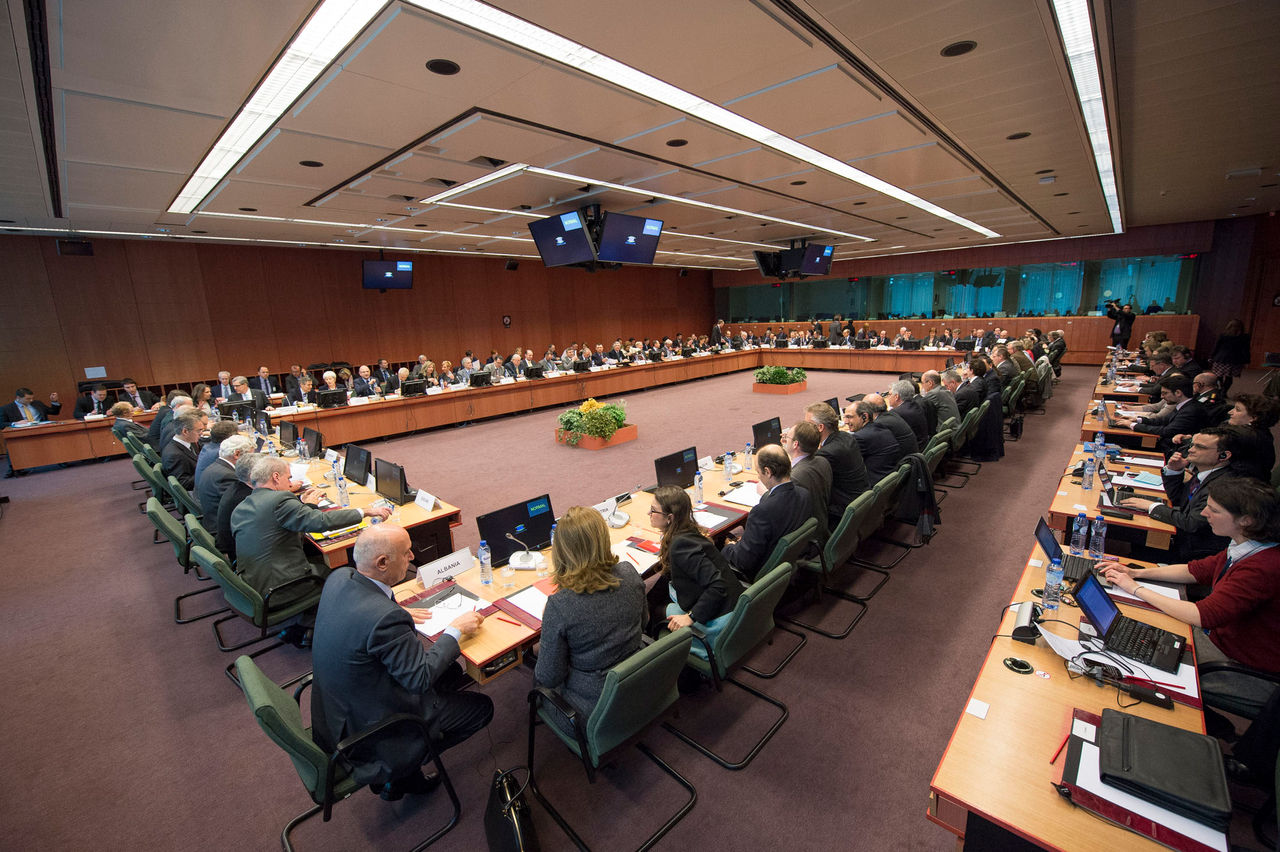
The North Atlantic Council (NAC) held a joint informal meeting with counterparts from the European Union’s Political and Security Committee (PSC) at ambassadorial level on Wednesday (5 March 2014) to discuss the situation in Ukraine.
NATO Deputy Secretary General Ambassador Alexander Vershbow co-chaired the meeting which was held at the EU Council’s Justus Lipsius building. The NATO and EU ambassadors discussed the latest developments in Ukraine and assessed their security implications.
The discussions showed the convergence of views in both organisations in upholding Ukrainian sovereignty and territorial integrity, the need for a dialogue between Ukraine and Russia as well as de-escalating steps in view of a peaceful solution to the crisis in full respect of international law as laid down in bi-and multilateral commitments. Ambassadors had an exchange of views on the various dimensions of the crisis in Ukraine and the options for the response of the international community.
NATO and the EU cooperate on issues of common interest and work side by side in crisis-management, capability development and political consultations.
Separately, NATO Secretary General Anders Fogh Rasmussen held talks with Herman Van Rompuy, President of the European Council which focused on the crisis in Ukraine and preparations for NATO’s Summit in Wales.