
Close
Back


From now on you can download videos from our website
If you would also like to subscribe to the newsletter and receive our latest updates, click on the button below.
Enter the email address you registered with and we will send you a code to reset your password.
The password must be at least 12 characters long, no spaces, include upper/lowercase letters, numbers and symbols.
Click the button to return to the page you were on and log in with your new password.
25 February 2014
1 MIN READ
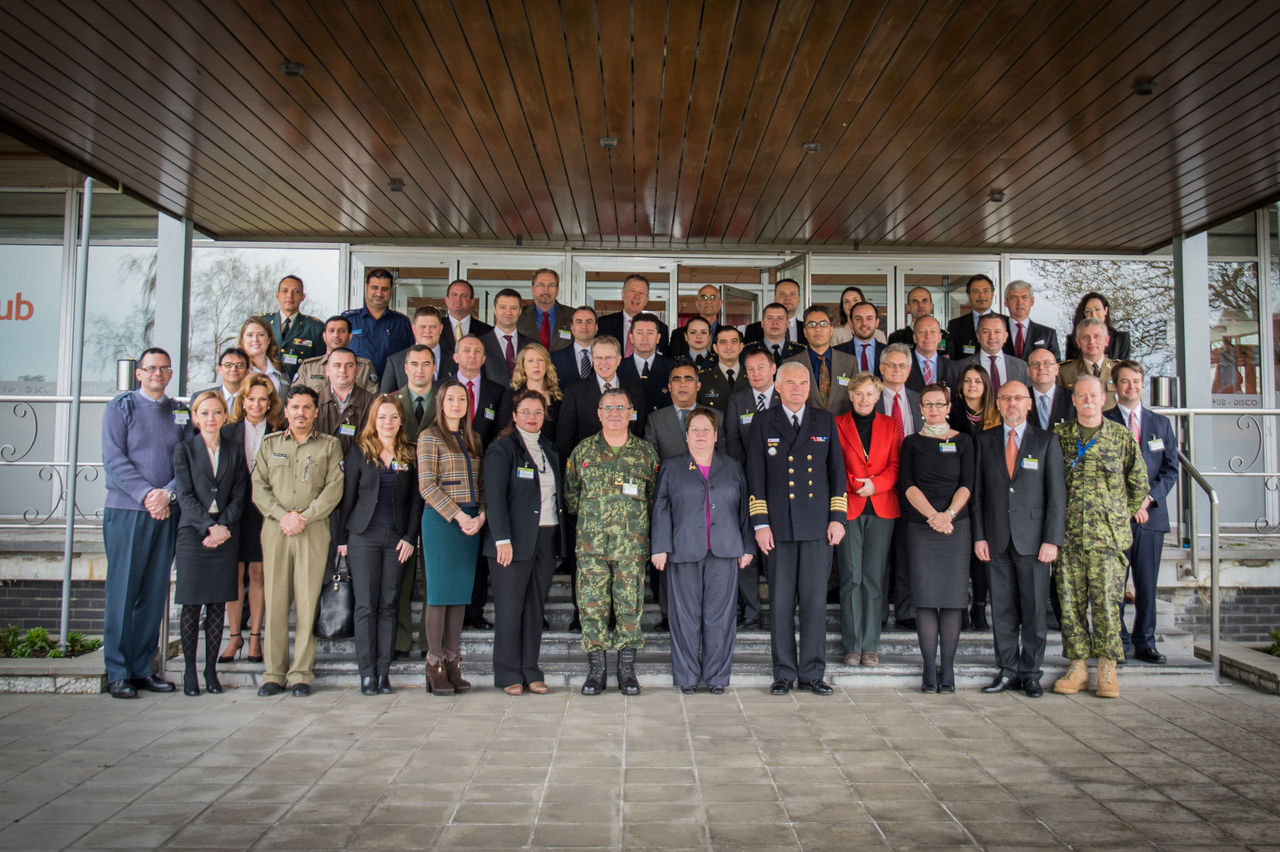
Education and training requirements for operations and ministerial capacity development were the focus of discussions at a conference entitled, “The Building Integrity Education and Training Discipline”. The event took place at the Supreme Headquarters Allied Powers Europe (SHAPE) in Mons, Belgium on 25 and 26 February.
The conference brought together 60 participants, including representatives from 13 nations, as well as building integrity (BI) implementing partners and non-governmental and international organisations such as the United Nations and the Organization for Security Co-operation in Europe. Delegates looked at courses already on offer and examined ways to develop them to match current needs.
“Corruption within military organisations reduces public trust in the armed forces, whereas the impact of external corruption on the military can lessen operational effectiveness and it certainly wastes scarce resources,” said SHAPE Vice Chief of Staff, Lieutenant General Philippe Stoltz. “The bottom line is that corruption can lead to a cycle of recurring instability and conflict,” he stressed.
Dr Alberto Bin, Director of the Integration, Partnerships and Cooperation Directorate at NATO, emphasised the importance of continuity.
“This conference should be seen as the start of a regular dialogue,” Dr Bin said. “From your discussion we will continue to develop a NATO methodology to support BI education and training and establish a regular calendar of events so that BI requirements and contributions can be made in a systematic way as the Alliance proceeds with operational planning as well as capacity building,” he explained.
The conference was organised in collaboration with the NATO International Staff and Allied Command Transformation. It was the first since BI was established as a NATO discipline in August 2012.