
Close
Back


From now on you can download videos from our website
If you would also like to subscribe to the newsletter and receive our latest updates, click on the button below.
Enter the email address you registered with and we will send you a code to reset your password.
The password must be at least 12 characters long, no spaces, include upper/lowercase letters, numbers and symbols.
Click the button to return to the page you were on and log in with your new password.
13 January 2014
2 MIN READ
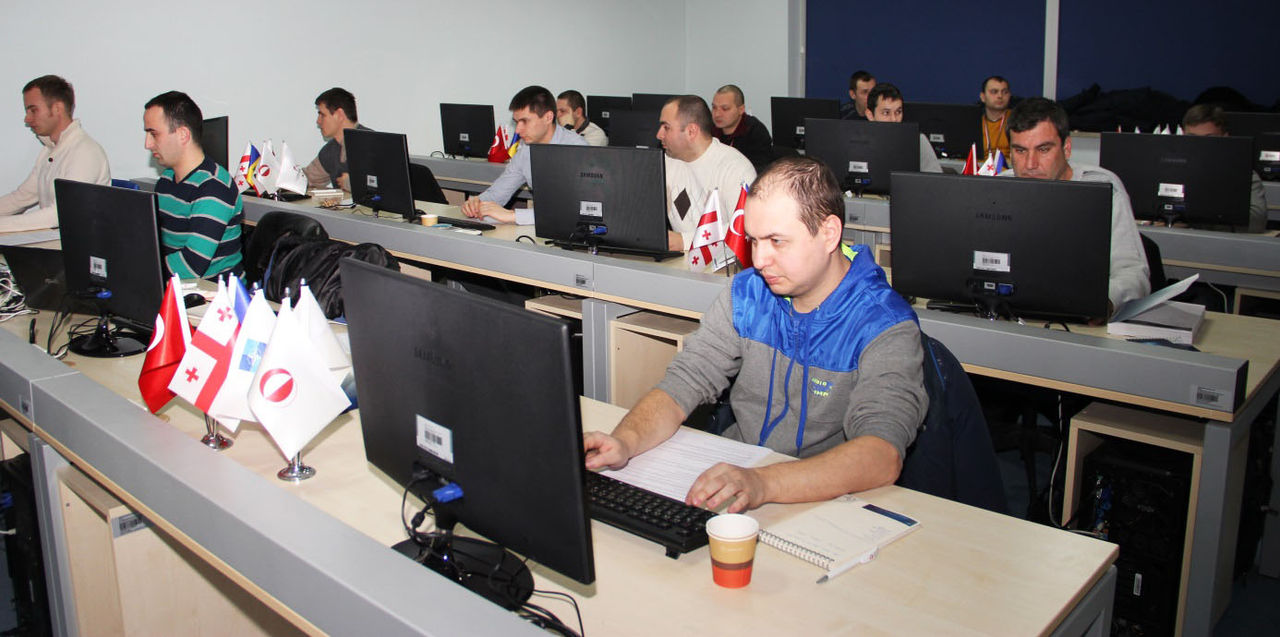
Cyber threats know no borders and are of increasing concern. Training and education is fundamental for improving the defence of networks across Allied and partner countries. Cyber defence is a key priority area of cooperation for Moldova. In January, a group of Moldovan system/network administrators took part in a two-week training course in Turkey to build expertise and improve the ability to strengthening the defence of critical infrastructure.
“Protecting our cyberspace from attacks is crucial to ensuring national security. Training IT specialists from various institutions is the best investment,” says Natalia Spinu, Chief of the Cyber Security Center, S.E. Center of Special Telecommunication of the Republic of Moldova.
“Cyber defence is as much about people as it is about technology,” stressed Michael Gaul, Senior Advisor for Strategy and Projects in NATO’s Emerging Security Challenges Division. “Enhancing cooperation with our partners, particularly as many of them are connected to Allied networks in the context of NATO’s operations and missions, is of utmost importance.”
Increasing capability in this important field will support Moldova’s efforts to enhance its national contribution to NATO’s missions within and beyond the Euro-Atlantic area. The country has recently agreed to contribute to NATO’s mission in Kosovo (KFOR).
More widely, awareness raising and improved resilience of networks has the potential to increase the level of cyber defence across the Alliance and among partner countries. The training course provided the Moldovan personnel with an opportunity to acquire new knowledge and skills and become more familiar with current threats and counter-measures – such as identification and the mitigation of threats. It also provided a platform for cyber experts from different institutions to build an informal network and share their respective areas of expertise.
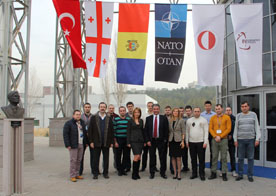
Fifteen system/network administrators from six key institutions across Moldova took part in the course at the Informatics Institute at the Middle East Technical Institute (METU) in Ankara, Turkey, from 13 to 24 January 2014.The course was supported by the NATO Science for Peace and Security (SPS) Programme, and developed in close cooperation with experts from Canada, Georgia and Turkey.
First initiated in 2012, this course is part of a series of successful training courses that have been conducted with other partner countries of NATO, such as Afghanistan, Montenegro and the former Yugoslav Republic of Macedonia1.
1. Turkey recognises the Republic of Macedonia with its constitutional name.