
Close
Back


From now on you can download videos from our website
If you would also like to subscribe to the newsletter and receive our latest updates, click on the button below.
Enter the email address you registered with and we will send you a code to reset your password.
The password must be at least 12 characters long, no spaces, include upper/lowercase letters, numbers and symbols.
Click the button to return to the page you were on and log in with your new password.
11 December 2013
1 MIN READ
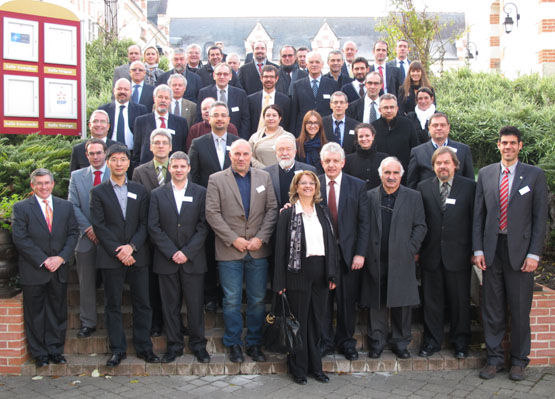
Experts from the NATO-Russia Council (NRC)-NATO Science for Peace and Security (SPS) Programme examined technologies which could form part of a follow-on project to the successful NRC-SPS-sponsored STANDEX (stand-off detection of explosives) Project. Meeting in Tours, France from 3 to 5 December, participants also looked at ways to advance detection technologies developed in STANDEX and considered technologies to help address potential threats once detected.
“This meeting served as a first step in exploring the possibility of developing a follow-on project within the framework of the NATO-Russia Council,” said Dr Deniz Beten, Senior SPS and Partnership Cooperation Advisor at NATO Headquarters.
Over 50 participants examined 24 proposals outlining cutting-edge technologies in the field of explosives detection and alarm management.
The STANDEX project developed technology to remotely detect explosives concealed on a suicide bomber in a crowd, in real time. The success of this technology was clearly demonstrated when it was tested earlier this year in a European metro system. STANDEX technology has the potential to protect millions of people who use public transport across NATO nations and Russia.
A flagship initiative of the NATO-Russia Council, the STANDEX project is a concrete example of NATO-Russia cooperation in a domain where common threats require common solutions. Launched in 2009, it was designed and developed jointly by a consortium of Dutch, French, German, Italian and Russian laboratories and businesses, pooling their skills and know-how.