
Close
Back


From now on you can download videos from our website
If you would also like to subscribe to the newsletter and receive our latest updates, click on the button below.
Enter the email address you registered with and we will send you a code to reset your password.
The password must be at least 12 characters long, no spaces, include upper/lowercase letters, numbers and symbols.
Click the button to return to the page you were on and log in with your new password.
04 December 2013
2 MIN READ
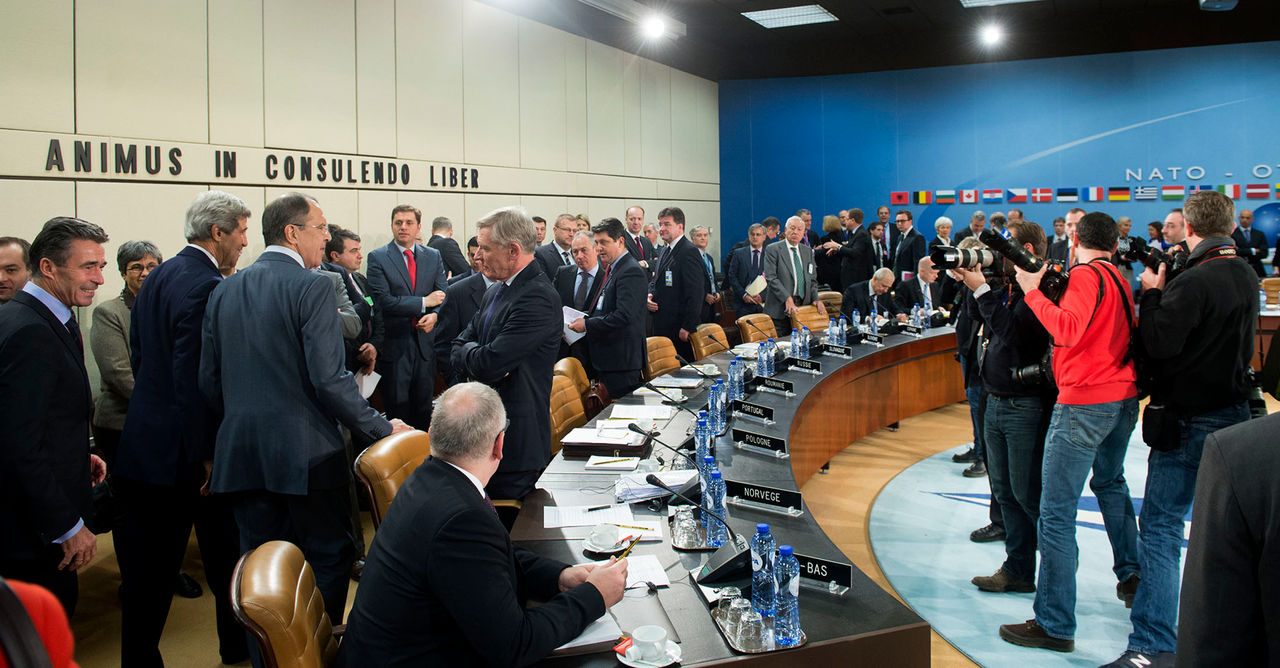
NATO Foreign Ministers together with their Russian counterpart, Sergey Lavrov, on Wednesday (4 December 2013) agreed to launch a joint trust fund project to dispose of obsolete and dangerous ammunition in the Kaliningrad region and discussed pressing international security issues, with a focus on Afghanistan, Iran and Syria. “Today, we agreed to launch a project for the disposal of obsolete and dangerous ammunition in a safe, efficient and environmentally friendly way”, the Secretary General said. “By doing so, we will make the environment safer for all those who live near these stocks of dangerous ammunition. And we will create the conditions for former military sites to be converted to civilian use.”
NATO and Russia will initiate a pilot project for the disposal of obsolete and dangerous ammunition in the Kaliningrad region of Russia. The project will be paid for through a new trust fund. The total cost of the entire effort is estimated at around 50 million euros and projected to run five years.
The NATO Russia Council (NRC) also exchanged views on global security issues including Afghanistan, Iran and Syria. The NRC adopted a statement supporting the work of the joint United Nations-Organisation for the Prohibition of Chemical Weapons (OPCW) mission which is overseeing the destruction of Syria’s chemical weapons stockpiles and production facilities. The Foreign Ministers urged “all Syrian parties to cooperate” with the joint UN-OPCW mission. Ministers urged all Syrian parties to ensure unfettered access and a secure environment for the joint mission. The statement added that NRC member states stand ready to consider further assistance to the mission, if requested. Ministers also made clear that the only solution to the Syrian crisis was an inclusive and Syrian-led political process and they welcomed the decision to convene the International Conference on Syria in Geneva in January 2014.
At their meeting, the NRC also agreed an ambitious programme of joint cooperation activities for 2014. NATO and Russia already cooperate in the fight against narcotics, terrorism and piracy. The Secretary General said that NATO and Russia will explore the potential for cooperation in new areas, notably in mine disposal in Afghanistan and in the fight against roadside bombs more broadly. “This will benefit our shared security. It will allow us to promote stability in Afghanistan, and thus in the Euro-Atlantic region. And it will allow us to improve the protection we give to our troops, our citizens and all those who are threatened by home-made bombs”, the Secretary General said.