
Close
Back


From now on you can download videos from our website
If you would also like to subscribe to the newsletter and receive our latest updates, click on the button below.
Enter the email address you registered with and we will send you a code to reset your password.
The password must be at least 12 characters long, no spaces, include upper/lowercase letters, numbers and symbols.
Click the button to return to the page you were on and log in with your new password.
24 July 2013
1 MIN READ
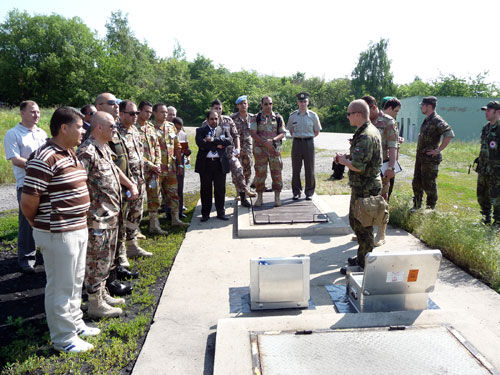
Civilian populations are threatened by potential incidents involving chemical, biological, radiological and nuclear (CBRN) agents, which are the consequence of either terrorist acts or natural and man-made disasters. It is important to ensure that first responders are prepared for such eventualities.
To address this need a training course for CBRN first responders took place at the Joint Chemical, Biological, Radiological and Nuclear Defence Centre of Excellence in Vyškov, the Czech Republic in June 2013.
Blending theory with practice, the main aim of the course was to ensure that first responders have a common knowledge base and a minimum level of preparedness when responding to CBRN incidents. To this end, the training course was designed to assist nations in improving their civil emergency plans, including cooperation between first responders, while complementing current national training activities.
Sponsored by the NATO Science for Peace and Security (SPS) Programme, the event brought 18 participants from Egypt, Jordan and the United Arab Emirates together with Allied experts for a five-day intensive training course.
“Not only was this the first time the Centre of Excellence hosted an SPS training course, but it was also the first time a partner from the Istanbul Cooperation Initiative – the United Arab Emirates – participated in an SPS event,” says Dr Eyup Kuntay Turmus, Science Advisor at NATO.
Dr Turmus underscored the importance of this initiative in contributing to the enhanced capacity of NATO’s partners in CBRN response. It will provide a solid foundation upon which to develop future activities with both the Centre of Excellence and partners in the field of CBRN response. It will help clarify and establish standards required for successful cooperation in such events both at a national level and between Allies and partners.