
Close
Back


From now on you can download videos from our website
If you would also like to subscribe to the newsletter and receive our latest updates, click on the button below.
Enter the email address you registered with and we will send you a code to reset your password.
The password must be at least 12 characters long, no spaces, include upper/lowercase letters, numbers and symbols.
Click the button to return to the page you were on and log in with your new password.
19 March 2012
2 MIN READ
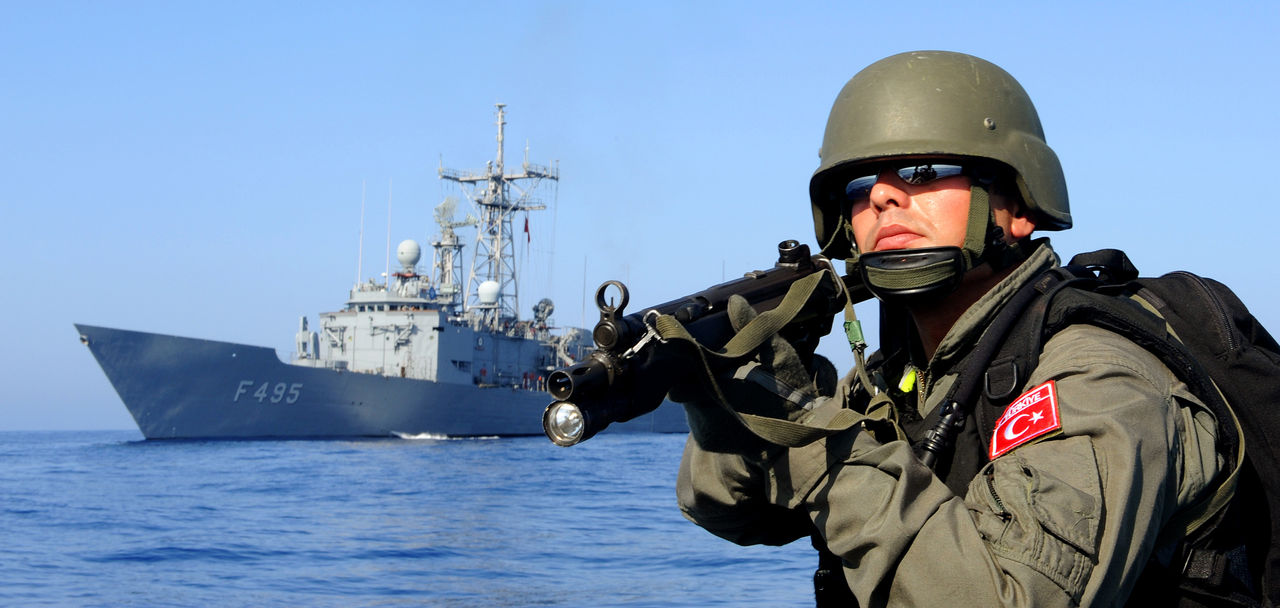
NATO Allies agreed on 19 March to extend the Alliance’s counter piracy naval operation Ocean Shield, which operates off the Horn of Africa to protect merchant traffic from pirate attacks, for a further two years until the end of 2014.
This decision reflects NATO’s enduring commitment to counter the threat of piracy that exists in the Gulf of Aden and in the Western Indian Ocean. Working with the maritime community, individual nations and the US and EU-led counter piracy operations, NATO’s naval effort is making a difference, with the number of successful pirate hijacking down significantly in 2012.
In January of this year there were 4 pirate attacks, all of which were unsuccessful. As a result 80 suspected pirates were captured by counter piracy forces of which 59 were detained by NATO ships. In comparison, in January 2011 there were 29 attacks and 6 ships were pirated.
At the end of November 2011, the United Nations Security Council voted to extend its mandate for those fighting piracy off the Horn of Africa by a further 12 months. The extension of NATO operation to the end of 2014 reflects NATO commitment to an effort that started in 2008. In unanimously adopting resolution 2020, the Security Council stressed the need for the international community to not only tackle piracy but also to deal with the underlying causes i.e. the instability ashore in Somalia, something NATO has been stressing from the beginning.
NATO vessels use intelligence, surveillance and reconnaissance to separate out legitimate maritime traffic from suspected pirate vessels. Commercial ships that are transiting the area are monitored and in many cases escorted to ensure their safe passage. The shipping industry is in regular contact with NATO and the other counter piracy operations through the NATO Shipping Centre, where pirate activity can be reported and shared to prevent attacks and enhance situational awareness of the maritime environment.
NATO ships also actively pursue suspected pirate ships to prevent them from staging attacks. NATO boarding teams can board a suspect vessel to determine if pirates are on board. NATO vessels can also use force to stop a pirate vessel or intervene in a hijacking. Any detained pirates will be transferred as soon as possible to designated national law enforcement agencies. In addition NATO, along with its partners, has been working with the maritime community to ensure that both merchant ships and crews are aware of Best Management Practices, which gives advice on how to protect vessels against pirate attack.