
Close
Back


From now on you can download videos from our website
If you would also like to subscribe to the newsletter and receive our latest updates, click on the button below.
Enter the email address you registered with and we will send you a code to reset your password.
The password must be at least 12 characters long, no spaces, include upper/lowercase letters, numbers and symbols.
Click the button to return to the page you were on and log in with your new password.
02 July 2010
1 MIN READ
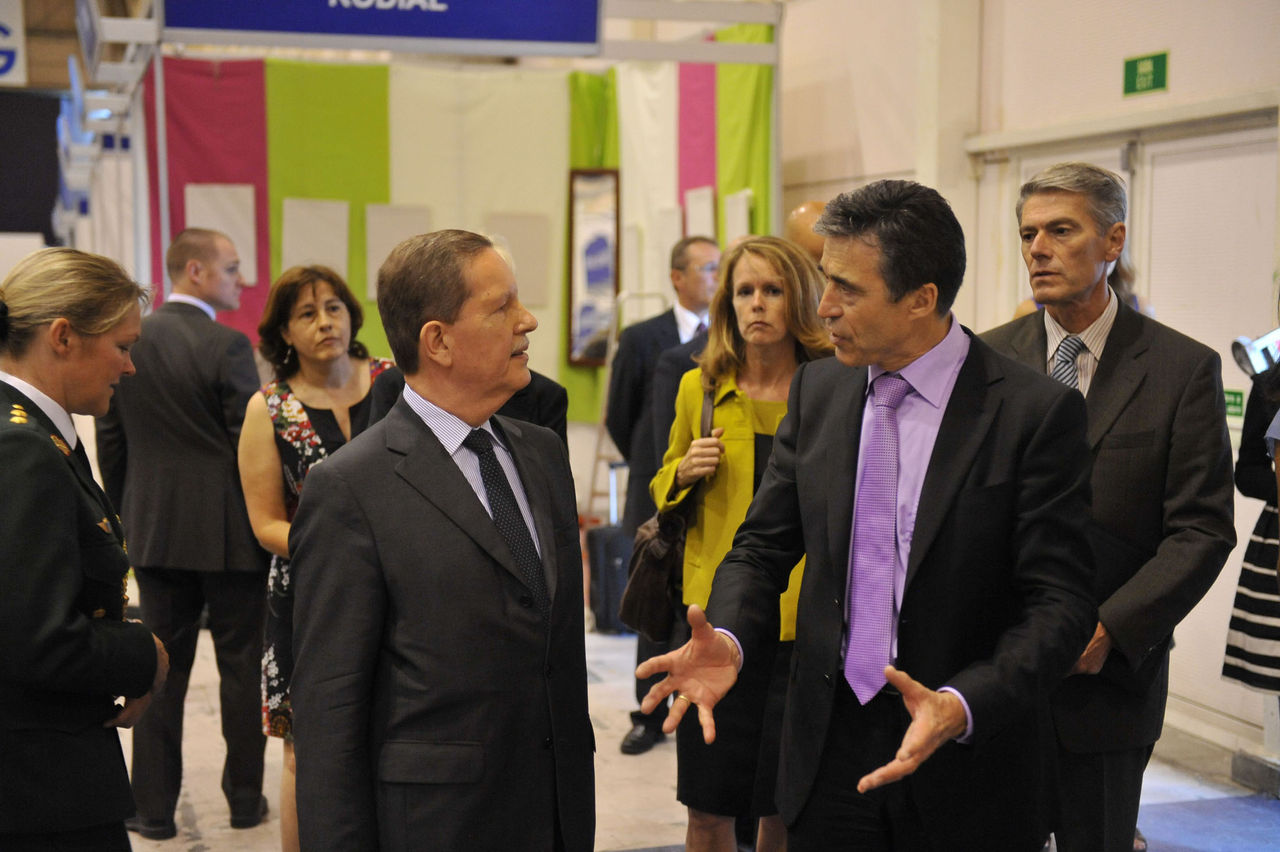
On 2 July, NATO Secretary General Anders Fogh Rasmussen travelled to Lisbon, Portugal, where NATO's next Summit will be held in November this year. Meeting with Prime Minister José Socrates, Foreign and State Minister Luis Amado, Defence Minister Santos Silva, and Parliament President Jaime Gama, he discussed the upcoming Summit, the development of a new Strategic Concept for the Alliance and NATO reform.
Another key topic centered on the Alliance's operations, particularly in Afghanistan, where some 270 Portuguese soldiers form part of the NATO-led International Security Assistance Force (ISAF). To help build up Afghanistan's own security forces, Portugal has recently committed 40 trainers to NATO's training mission in the country.
The Secretary General stressed that with the nomination of Gen. Petraeus as the incoming ISAF Commander, "this is only about a change of command, it is not a change of strategy". He also expressed the hope that by the time of the Lisbon Summit in November, the alliance can announce the start of handing over control of some Afghan provinces to local authorities.
During his trip to Lisbon, the Secretary General also visited the Feira Internacional de Lisboa, the site of the NATO Summit, and gave a speech at the Catholic University of Lisbon, School of Economics.
In his speech, Mr Fogh Rasmussen reminded his listeners of the reasons why NATO was created in the aftermath of the Second World War. Proof of its success lay in the fact that, since the end of the Cold War, its membership has nearly doubled as former Soviet states sought to join "this unique zone of stability, prosperity and common values."
He said that we are now, like the Alliance's founding fathers, "standing at the threshold of a new era". Terrorism, cyber attacks and piracy are just three examples of new challenges NATO must address.
The Secretary General also said that the Alliance's new Strategic Concept will define NATO as "a modernized Alliance" and a "cooperative team player in a globalized world".