
Close
Back


From now on you can download videos from our website
If you would also like to subscribe to the newsletter and receive our latest updates, click on the button below.
Enter the email address you registered with and we will send you a code to reset your password.
The password must be at least 12 characters long, no spaces, include upper/lowercase letters, numbers and symbols.
Click the button to return to the page you were on and log in with your new password.
07 June 2010
1 MIN READ
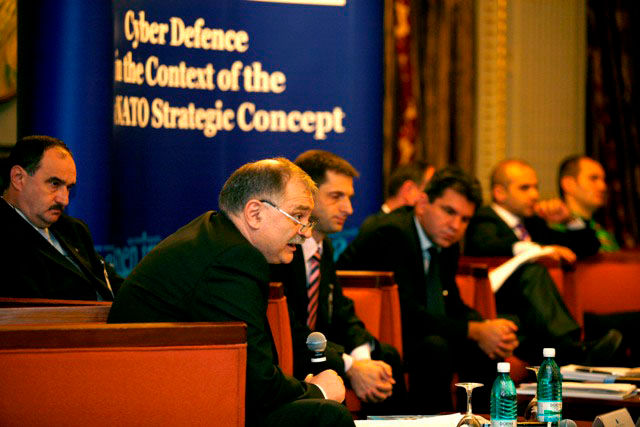
Defining NATO’s place in defending against cyber attacks was the focus of a conference in Bucharest organized by the Aspen Institute Romania and supported by NATO on 2 June. The event took place in the context of the development of a new Strategic Concept for the Alliance.
More than 100 participants from leading global IT companies, the banking sector, the intelligence community, NATO, the EU and other institutions attended the conference entitled “Cyber Defence in the Context of the New NATO Strategic Concept”. They discussed the urgency of cyber security and the challenges it poses to the wider international community, including NATO countries.
More specifically, they looked at how businesses can protect themselves against virtual threats, at the race between security innovation and increasingly sophisticated virtual weapons, and at the limits of national approaches and benefits of international cooperation.
The report of the Group of Experts on NATO`s new Strategic Concept identified cyber attacks directed against modern communication systems as one of the most probable threats to Allies in the coming decade.
The report recommends that “NATO must accelerate efforts to respond to the danger of cyber attacks by protecting its own communications and command systems, helping Allies to improve their ability to prevent and recover from attacks, and developing an array of cyber defence capabilities aimed at effective detection and deterrence.”
NATO's Public Diplomacy Division co-sponsored the conference to stimulate public debate about NATO's new Strategic Concept, which will be agreed by Allies at the Lisbon Summit in November.