
Close
Back


From now on you can download videos from our website
If you would also like to subscribe to the newsletter and receive our latest updates, click on the button below.
Enter the email address you registered with and we will send you a code to reset your password.
The password must be at least 12 characters long, no spaces, include upper/lowercase letters, numbers and symbols.
Click the button to return to the page you were on and log in with your new password.
02 June 2010
1 MIN READ
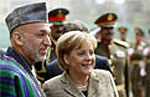
From 28 to 30 May, the conference “Understanding Afghanistan and Central Asia”, held by the Berlin-based NGO the Institute for Cultural Diplomacy, brought a range of experts together to discuss how to promote democracy and stability in Afghanistan and Central Asia.
Lectures, seminars and panel discussions held by leading experts in politics, diplomacy, economics, academia, civil society and the private sector addressed topics such as accelerating progress in Afghanistan, managing global interdependencies and promoting development. They also looked at the role Germany, Europe, NATO member states and other international partners can play in helping to ensure sustainable development, democracy and stability.
A common theme during the keynote addresses and subsequent panel discussion was the need for the international community to separate the goal or reducing the threat of international terrorism from the greater challenge of securing long-term stability and providing an environment for sustainable development.
“When you’re dealing with a problem like Afghanistan, where there’s a serious terrorist threat but there’s also social and economic and cultural issues, you have to have a combination of hard and soft power,” said MP and former UK Foreign Secretary Sir Malcom Rifkind. “You can’t have one without the other.”
Ali Ahmad Jalali, former Afghan Interior Minister, echoed the view, saying that first you need to provide security in Afghanistan. “And then to consolidate security, you have to take other measures – development measures, cultural measures, diplomatic measures,” which can enrich civil society.
The event, which was supported by NATO, focused on the following issues: