
Close
Back


From now on you can download videos from our website
If you would also like to subscribe to the newsletter and receive our latest updates, click on the button below.
Enter the email address you registered with and we will send you a code to reset your password.
The password must be at least 12 characters long, no spaces, include upper/lowercase letters, numbers and symbols.
Click the button to return to the page you were on and log in with your new password.
01 June 2010
1 MIN READ
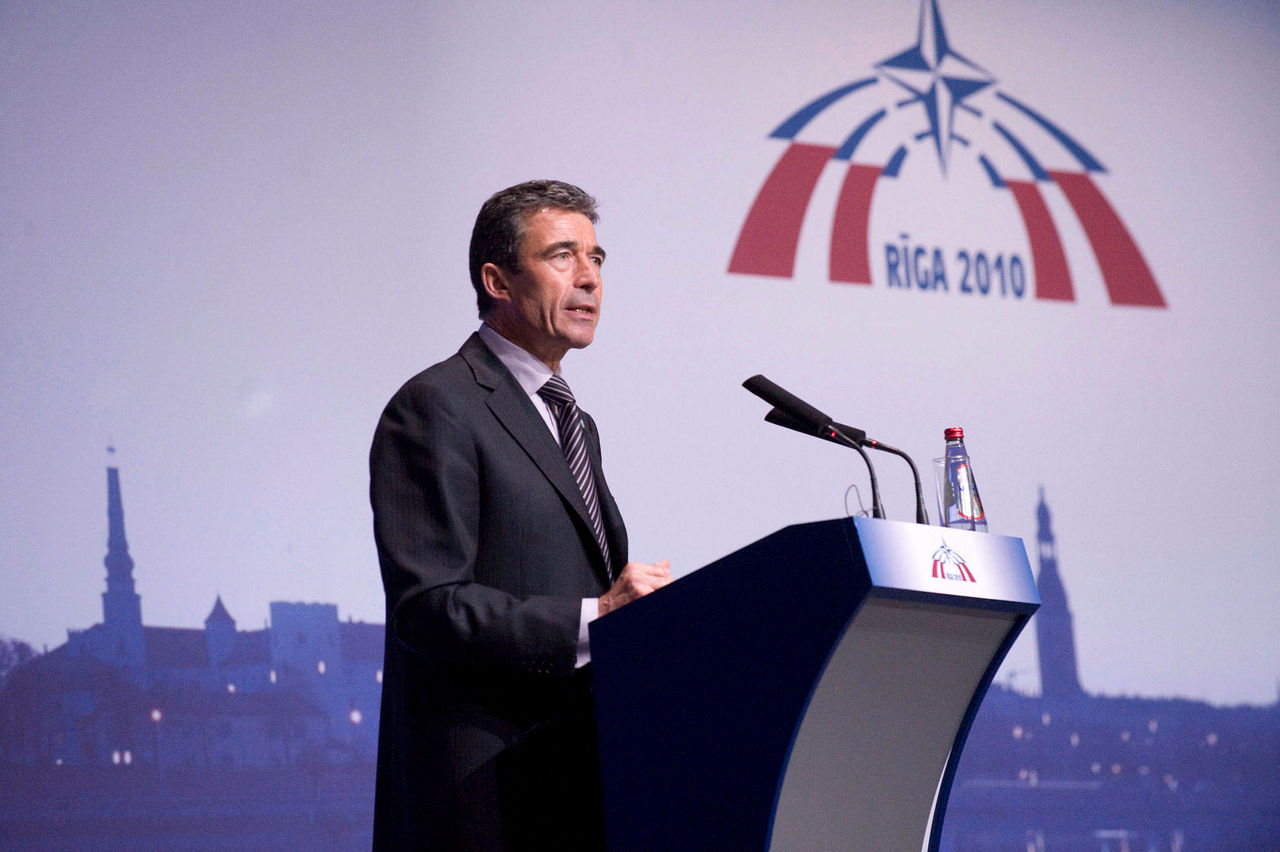
On 1 June, Secretary General Anders Fogh Rasmussen addressed the NATO Parliamentary Assembly at its Spring Session in Riga, Latvia. He spoke about the importance of the Alliance’s mission in Afghanistan and its longer-term strategic orientation. He also met with Latvian President Valdis Zatlers and Prime Minister Valdis Dombrovskis.
Afghanistan is the Alliance’s “top priority”, the Secretary General said, and if NATO stays the course, the country would no longer be a safe haven for terrorism. “Afghans – including women and girls -- would have more political freedom, more education and better health care than ever before. And Afghanistan would become a powerful symbol in the region, and beyond, that change is possible.”
He said that the “aim is political” and the strategy to change the political foundations in key areas of Afghanistan is being demonstrated now in Central Helmand and Kandahar. “For the first time, local political leaders are meeting freely to choose their own future,” he said. “Three thousand children, many of them girls, are now in newly built schools. Markets are flourishing. And people have more and more confidence to come out and travel the roads.”
The Secretary General also spoke about the Peace Jirga that President Hamid Karzai will lead in Afghanistan this week. “It will set out the road to reconciliation and reintegration for extremists who want to stop fighting and find their place in Afghan society.”
Looking at the broader security picture, he said that, although globalization has brought benefits, it has also created new security challenges such as terrorism, failed states, proliferation, cyber attacks and the disruption of energy supplies.
He said that assured security, cooperative security and complementary security are key to facing these new challenges. The Alliance also needs to spend its limited resources more wisely and become a “more efficient service provider for its member nations.”
In closing, Mr Fogh Rasmussen recognized the NATO Parliamentary Assembly’s support for the Alliance over the years and expressed his hope that NATO could continue to rely on it in the future.