
Close
Back


From now on you can download videos from our website
If you would also like to subscribe to the newsletter and receive our latest updates, click on the button below.
Enter the email address you registered with and we will send you a code to reset your password.
The password must be at least 12 characters long, no spaces, include upper/lowercase letters, numbers and symbols.
Click the button to return to the page you were on and log in with your new password.
14 April 2010
1 MIN READ
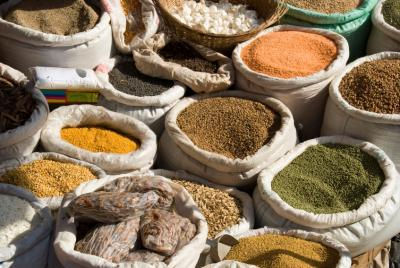
From 13 to 15 April 2010, NATO is holding the high-level research workshop “Advances in Food Security and Safety against Terrorist Threats and Natural Disasters” in Cairo, Egypt.
Led by Egyptian and American scientists, the event’s participants will begin by reviewing a NATO pilot study on food security as a basis for further discussions on the evolving food chain security dynamic. The participants will discuss different mechanisms to prevent or minimize deliberate contamination of food supply from microbial or chemical substances, as well as ways to minimize the health and economic risks to the food supply chain in the event of a terrorist act or unintentional contamination.
The invited speakers will highlight the importance of reducing the vulnerabilities of food items, and examine new techniques and methods used in the production of safe food products. Participants will examine novel preservation approaches in addition to other possible solutions such as tamper-evident packaging and radio frequency identification (RFID) for logistics, distribution and storage. The emerging risks related to food technology will also be discussed.
Forty experts from NATO, Partner and Mediterranean Dialogue countries will participate in the workshop, which will act as a forum for a critical assessment of food security and safety as a way to protect against potential terrorist attacks.The event will also aim to develop a strategy to mitigate risks to food availability in the event of a terrorist attack or natural disaster, and to identify directions for future research and approaches to better prevent and respond to food terrorism.
Speakers at the event will include food security experts from Turkey, Germany, France, Spain, Romania, Serbia and Jordan. Representatives from the United Nations World Health Organization will also attend.
The workshop is funded through NATO’s Science for Peace and Security (SPS) Programme. For more information, visit www.nato.int/science (see “Calendar” for organisers’ contact details).