
Close
Back


From now on you can download videos from our website
If you would also like to subscribe to the newsletter and receive our latest updates, click on the button below.
Enter the email address you registered with and we will send you a code to reset your password.
The password must be at least 12 characters long, no spaces, include upper/lowercase letters, numbers and symbols.
Click the button to return to the page you were on and log in with your new password.
14 April 2010
1 MIN READ
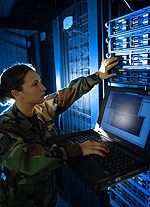
On 12 and 13 April in Wachtberg, Germany, the NATO Research and Technology Organization held its first in a series of six lectures on multisensor fusion – an approach to processing signals from a range of sensors to provide a better, more complete picture of one’s environment.
Different kinds of information are used by armed forces in operations to plan and carry out activities, including sensory data from sight, sound and touch. This data can often be more valuable to commanders and soldiers on the field when combined into a more accurate, complete and dependable source of information – saving lives through better decisions.
The lecture series aims to provide an introduction into modern distributed sensor networks and state-of-the-art tracking and data fusion technologies. Leading experts will discuss pros and cons, and review current developments.
Participants from NATO’s scientific and engineering community will learn about advanced applications in fields relevant to NATO’s mission, such as covert surveillance, security assistance systems and multisensor fusion products that produce better situation pictures.
Two more lectures will take place in Europe (La Spezia and Porto) in April and two in North America in May (Reston and Halifax).