
Close
Back


From now on you can download videos from our website
If you would also like to subscribe to the newsletter and receive our latest updates, click on the button below.
Enter the email address you registered with and we will send you a code to reset your password.
The password must be at least 12 characters long, no spaces, include upper/lowercase letters, numbers and symbols.
Click the button to return to the page you were on and log in with your new password.
13 April 2010
1 MIN READ
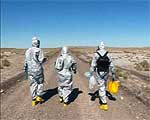
On 23 and 24 March 2010, NATO held a Chemical, Biological, Radiological, and Nuclear (CBRN) Defence Workshop and Exhibition at NATO Headquarters to share knowledge and skills in preventing, protecting and recovering from the use of Weapons of Mass Destruction (WMD).
Heads of State and Government at the 2006 Riga Summit agreed that WMD will remain the principal threat to the Alliance over the next several years. This workshop will therefore help strengthen work to counter a potential attack using these weapons and share knowledge on how to recover from them.
This event was especially important because it was aimed at deepening and expanding cooperation between Allied and Partner countries in this field, while gaining valuable insight on what the CBRN defence industry has to offer.
This year’s workshop and exhibition established itself as one of NATO’s largest partner events with over 220 participants from more than 45 countries, including four international organizations: the European Union, the European Defence Agency, the World Health Organization and the Organization for the Prohibition of Chemical Weapons.