
Close
Back


From now on you can download videos from our website
If you would also like to subscribe to the newsletter and receive our latest updates, click on the button below.
Enter the email address you registered with and we will send you a code to reset your password.
The password must be at least 12 characters long, no spaces, include upper/lowercase letters, numbers and symbols.
Click the button to return to the page you were on and log in with your new password.
17 March 2010
1 MIN READ
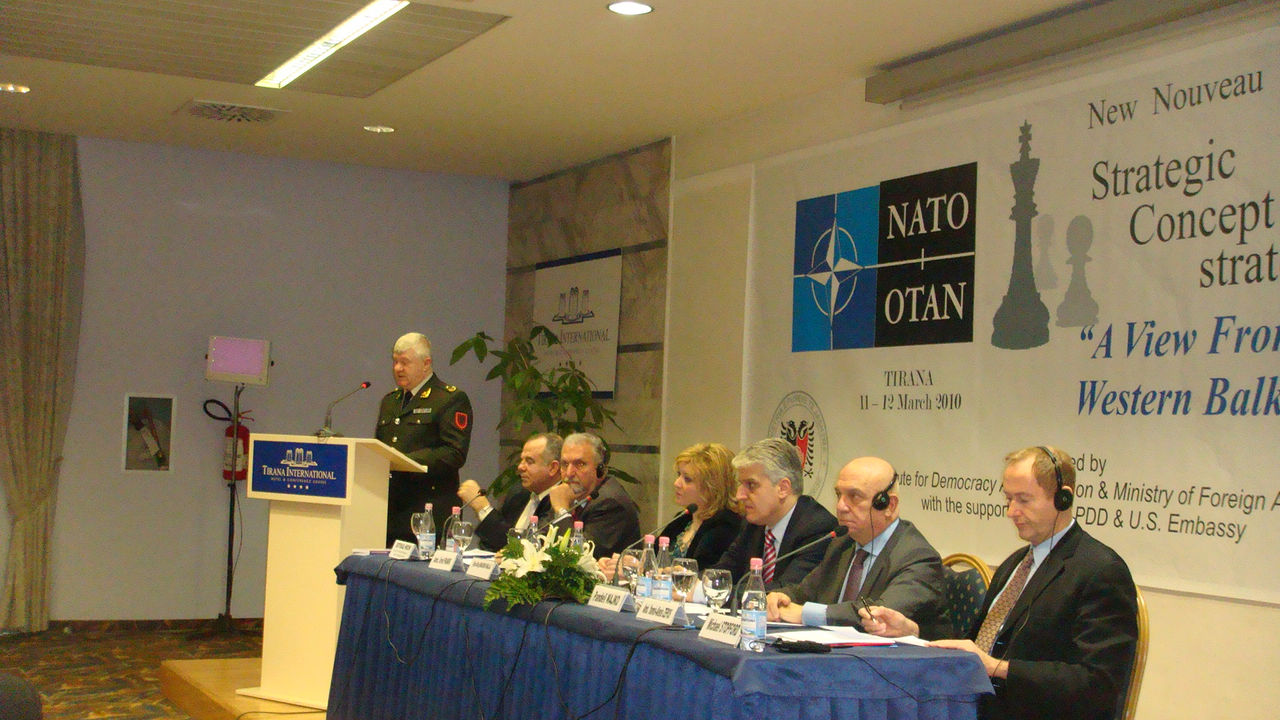
On 11 and 12 March, civil society representatives from across the Western Balkans gathered in Tirana, Albania, to discuss NATO’s new strategic direction at a conference organized by the Albanian Institute for Democracy and Mediation.
About 100 participants came from Albania, Bosnia Herzegovina, Croatia, the Former Yugoslav Republic of Macedonia*, Kosovo, Montenegroand Serbia.
At the event, the results were presented from a survey of security-related professionals and opinion leaders carried out across the region. Some 200 people were interviewed in January and February 2010.
Among the most interesting results was that 81.55% of respondents think that NATO should adjust to the changing dynamics of global developments and challenges, with 11.2% saying that NATO must hold to its current core principles.
Almost 66% of Western Balkan elites believe NATO is still the best institution to guarantee security in the Euro-Atlantic area, as well as in their region. However, 53% think that NATO's increased focus on global issues and threats could side-step important security issues in the transatlantic area, notably the Western Balkans.
The conference was held under the auspice of the Albanian Foreign Ministry, which also hosted two members of the Experts Group on the new Strategic Concept, Amb. Yannis-Alexis Zepos from Greeceand Amb. Umit Pamir from Turkey, for official consultations on the new strategy. The experts are touring Allied capitals to gather input for the report they are due to give the Secretary General on 5 May.
The experts participated in the event’s open discussion panel together with the Albanian Deputy Foreign Minister, Edith Harxhi. “Article V and collective defence should be reaffirmed as NATO's main core principles,” said Ms. Harxhi. “The transatlantic link is the core of the Allianceand should be guarded and strengthened.”
She also stressed the importance of pursuing the open door policy and enlargement, especially looking at the Western Balkans, fostering the comprehensive approach and searching for flexible and harmonized relations with the European Union.
Many university students from Tirana participated in the event, contributing to a lively debate. They reminded the experts and security community that the new Strategic Concept should be as simple as possible and provide answers to key questions that matter to citizens of Allied states.