
Close
Back


From now on you can download videos from our website
If you would also like to subscribe to the newsletter and receive our latest updates, click on the button below.
Enter the email address you registered with and we will send you a code to reset your password.
The password must be at least 12 characters long, no spaces, include upper/lowercase letters, numbers and symbols.
Click the button to return to the page you were on and log in with your new password.
12 March 2010
2 MIN READ
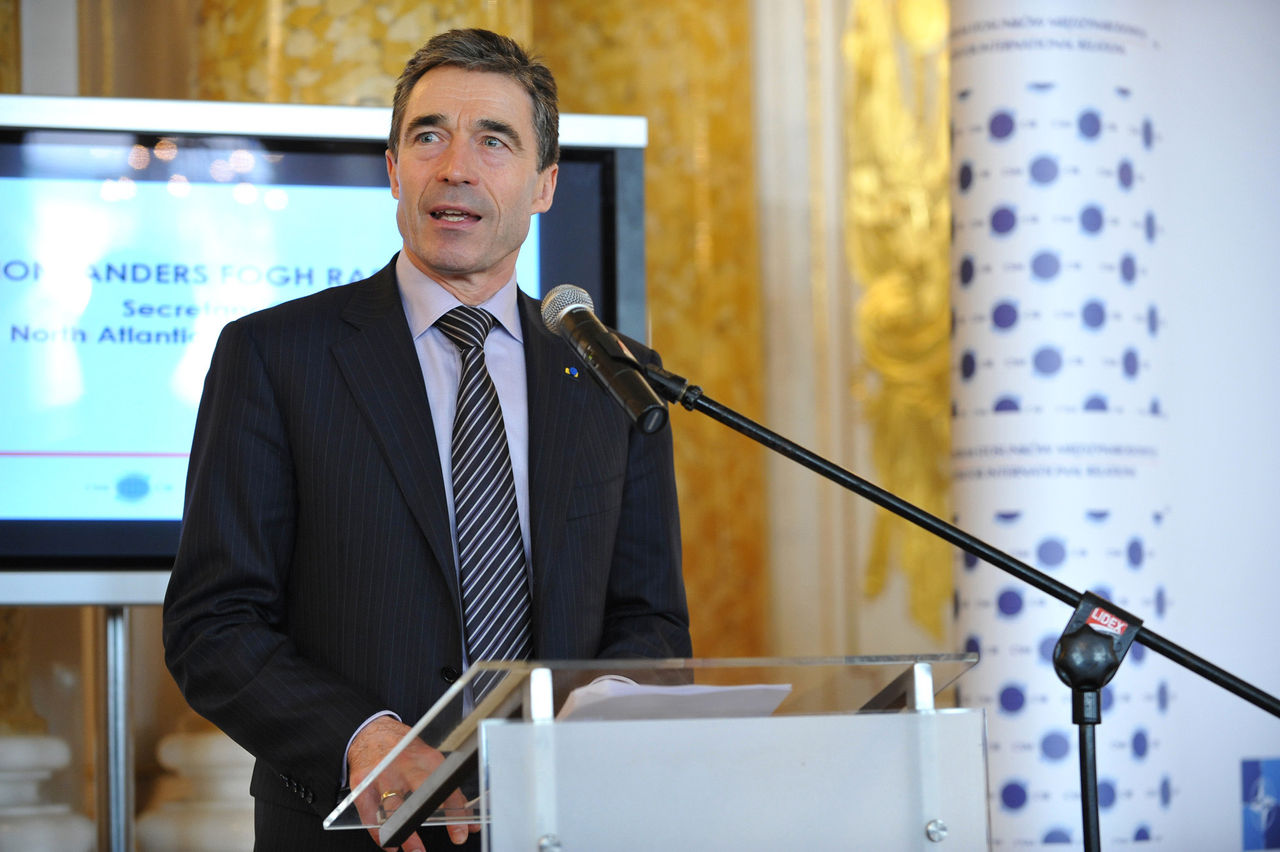
For two days the Polish capital has become a hub of discussion on NATO’s new Strategic Concept – a document that, once agreed by all Allies, will shape the organisation’s future direction. The Secretary General of NATO, Anders Fogh Rasmussen, began his first official visit to Poland on 12 March by taking part in the international conference “NATO’s New Strategic Concept – Global, Transatlantic and Regional Challenges and Tasks”.
The seminar – organised by the Warsaw Centre for International Relations and the Polish Ministry of Defence, with the support of NATO’s Public Diplomacy Division – brought together at the Royal Castle in Warsaw the Polish Foreign and Defence Ministers, members of the Group of Experts on the new Strategic Concept, as well as numerous local and international practitioners, academics and media representatives. Participants discussed the new security environment, security perceptions in Central and Eastern Europe and NATO’s partnerships.
In his keynote speech, the Secretary General outlined his vision of territorial defence for the Alliance. He stressed that while NATO’s core task was, is, and will remain, the defence of our territory and our populations, the meaning of territorial defence is changing.
“If we want to keep NATO’s territorial defence effective, affordable and credible, we must push ahead with the Alliance’s transformation,” he told the audience in Warsaw. “We need more flexible, mobile and deployable armed forces. If our military is stationary, if our armed forces can’t be moved beyond the borders of each individual member state, the defence of Allied territory will not be effective.”
Earlier the same day, Mr. Rasmussen met briefly with staff and young academics from the University of Warsaw’s Institute of International Relations and the Institute of Strategic Studies from Krakow. He was presented with a paper developed by the two analytical centres outlining comprehensive proposals for the new Strategic Concept.
On 11 March, hundreds of students attended the Warsaw Transatlantic Forum 2010 at the University of Warsaw, organised by the Polish Euro-Atlantic Association with support from, among others, NATO’s Public Diplomacy Division. The event was opened by Polish Defence Minister Bogdan Klich.
Members of the Group of Experts, former Polish President Aleksander Kwasniewski and other high-level guests contributed to a wide-ranging debate on NATO’s new Strategic Concept, operation in Afghanistan and relations with Russia.